








.webp)

Today’s customers don’t usually see one ad and instantly reach for their wallets. On average, they need to encounter a brand’s message at least seven times before making a purchase decision.
Meanwhile, global ad spend has passed $830 billion (Statista).
So yes, standing out is expensive.
But standing out without a strategy?
Even more expensive.
Pretty visuals and clever slogans can help, but they won’t carry a campaign on their own.
That’s where an advertising strategist comes in: the expert who decides who to target, what to say, where to show up, and how to turn attention into action.
Let's look at seven benefits of hiring an advertising strategist, plus the easiest way to work with one without hiring in-house.
What Is an Advertising Strategist?
An advertising strategist is the expert who turns business goals into advertising plans that can actually perform.
They connect the dots between audience research, brand positioning, campaign messaging, media channels, budget, and performance data.
Their job is to figure out who the campaign should reach, what message will matter, where it should show up, and how success will be measured.
They typically work closely with creative directors, copywriters, designers, paid ads specialists, media buyers, marketing managers, and analysts.
Together, they make sure every campaign is strategic, targeted, measurable, and built to improve over time.
7 Core Responsibilities of an Advertising Strategist
Here are the core duties of a good advertising strategist:
1. Conducting Market Research
The first step to any successful campaign is to get a feel for the landscape you’ll be operating in.
Before they do anything else, a good advertising strategist will dive deep into market research, analyzing everything from competitor campaigns to audience demographics and industry trends.
Gathering this data will help them to identify which messages will resonate most and help them find any opportunities to stand out.
Doing the necessary legwork will help an advertising strategist to create a campaign with a much higher chance of hitting its mark!
2. Developing Campaign Strategies
Armed with valuable research, a good advertising strategist will then move into the planning stage.
And that’s where the real magic begins.
In this stage, they’ll outline the goals of your campaigns, define any key messages that need to be gotten across, and decide on the campaign’s overall approach.
Whether you’re building awareness, driving engagement, or increasing conversions, a skilled strategist gives every campaign a clear roadmap.
They make sure each ad is on-brand, audience-focused, and built to deliver measurable results.
3. Choosing the Right Advertising Platforms
An advertising strategist uses audience research, campaign goals, budget, and channel behavior to choose the platforms most likely to drive results.
That could mean LinkedIn for B2B decision-makers, Google Search for high-intent buyers, YouTube for product education, Meta for retargeting, or print and out-of-home for local awareness.
They also make sure each platform has a clear purpose. Because the same ad won’t work everywhere, and “let’s post it on all channels” is not a strategy.
By choosing the right mix, an advertising strategist helps your campaign show up where it matters most and reach people in the moments they’re most likely to act.
4. Collaborating with Creative and Marketing Teams
A great advertising campaign has a lot of moving parts: strategy, copy, design, media buying, landing pages, analytics, and approvals.
An advertising strategist helps keep all of those pieces working toward the same goal.
They work closely with creative directors, copywriters, designers, paid ads specialists, media buyers, marketing managers, and analysts to make sure the campaign is clear, cohesive, and performance-focused.
That collaboration matters because even strong creative can fall flat if it’s disconnected from the audience, platform, or campaign objective.
An advertising strategist helps translate the campaign strategy into direction the whole team can use.
That means sharper messaging, stronger visuals, better channel fit, and fewer “wait, what are we actually trying to do here?” moments.
5. Setting and Managing Budgets
Strategy + Finance = Budget Allocation.
And advertising strategists are the masterminds of making sure every dollar counts.
These experts take your campaign budget and allocate funds to the best-fit channels to help you get the most bang for your marketing buck.
They constantly monitor ad spend and other costs as well and adjust spending based on how well each channel is doing.
This careful attention to detail makes sure that an organization’s resources are optimized, and every dollar is working toward maximizing your campaign’s impact.
6. Tracking and Analyzing Marketing Campaigns
Once a campaign passes the development stages and goes live, an advertising strategist’s job isn’t over.
They make sure to use tools like Google Analytics, HubSpot, Sprout Social, and more to measure crucial KPIs like impressions, engagement, and conversions.
By keeping an eye on your metrics, they can easily spot what’s working and what needs some fine-tuning to make sure that your campaigns are always performing at their best.
7. Reporting the Results
Then finally, when the work has been done, it’s time to showcase the results!
Advertising strategists will compile reports that highlight successes and gaps, analyze the data, and outline any areas for improvement during the next campaign.
These expert insights are invaluable for future campaigns and help your brand understand the ROI of your ad spend and refine your strategies for even better outcomes next time!
{{drowning-in-projects-an}}
7 Reasons Why Your Brand Needs an Advertising Strategist
An advertising strategist brings invaluable experience and expert direction to your marketing campaigns but the benefits of having the right fit for your team will go way beyond that!
Here are some other areas where an advertising strategist can make a huge impact on your brand’s success:
- Maximizes Ad Spend: Advertising strategists work hard to make sure every dollar you spend works toward reaching your target audience, minimizing waste and boosting ROI.
- Targets the Right Audience: By analyzing data and trends, a good strategist helps you connect with the most relevant audience segments, which increases the likelihood of engagement and conversions.
- Maintains Brand Consistency: Strategists keep up with your campaigns across platforms and make sure that your brand’s message and tone stay consistent, strengthening your brand recognition and trust.
- Keeps Up with Market Changes: Advertising strategists are pros at responding to real-time data, adjusting campaigns on the fly to stay effective in changing market conditions and keep your brand top-of-mind.
- Provides Measurable Results: Strategists track and analyze campaign metrics to help you see clear results and make data-driven decisions for any future campaigns.
- Brings Strategic Insight: With expertise in audience behavior, ad platforms, and market trends, strategists can guide campaigns to improve your reach and impact.
- Saves Time and Resources: By overseeing your campaigns, advertising strategists free up the rest of your team’s time, allowing you to focus on other core business activities.
How to Hire an Advertising Strategist: 8 Key Steps
Convinced that an advertising strategist is the next new hire your brand needs to make?
Great!
But before you start interviewing, here are some steps to take to make sure that your organization makes the right hire for your goals, your company culture, and your needs:
1. Get Clear on What You Need
Advertising strategy can overlap with brand strategy, media planning, paid ads, creative strategy, and performance marketing.
So first, define what this person will actually own.
Will they plan campaigns, choose channels, guide creative direction, write briefs, improve paid ad performance, analyze results, or recommend budget shifts?
That clarity helps you hire the right expert instead of a strategist-shaped mismatch.
2. Define What Success Looks Like
Next, identify the results you want this strategist to help drive.
Are you trying to increase brand awareness, generate qualified leads, improve ROAS, enter a new market, or sharpen campaign messaging?
A strong advertising strategist should connect that goal to a clear campaign plan, audience strategy, channel mix, messaging direction, budget approach, and measurement framework.
3. Decide What Kind of Strategist You Need
Not every advertising strategist has the same specialty.
Some focus on brand and campaign strategy.
Others specialize in paid media, performance marketing, audience research, creative testing, or channel planning.
A B2B brand may need LinkedIn, Google Search, and lead-gen experience.
A consumer brand may need Meta, TikTok, YouTube, influencer, and creative testing expertise.
The more specific you are, the stronger your shortlist will be.
4. Set Your Budget and Hiring Model
Decide whether you need a full-time hire, freelance strategist, agency partner, or an on-demand creative and marketing team like Designity’s.
Here's a quick breakdown of each model and their pros and cons:
1. Full-Time Hire
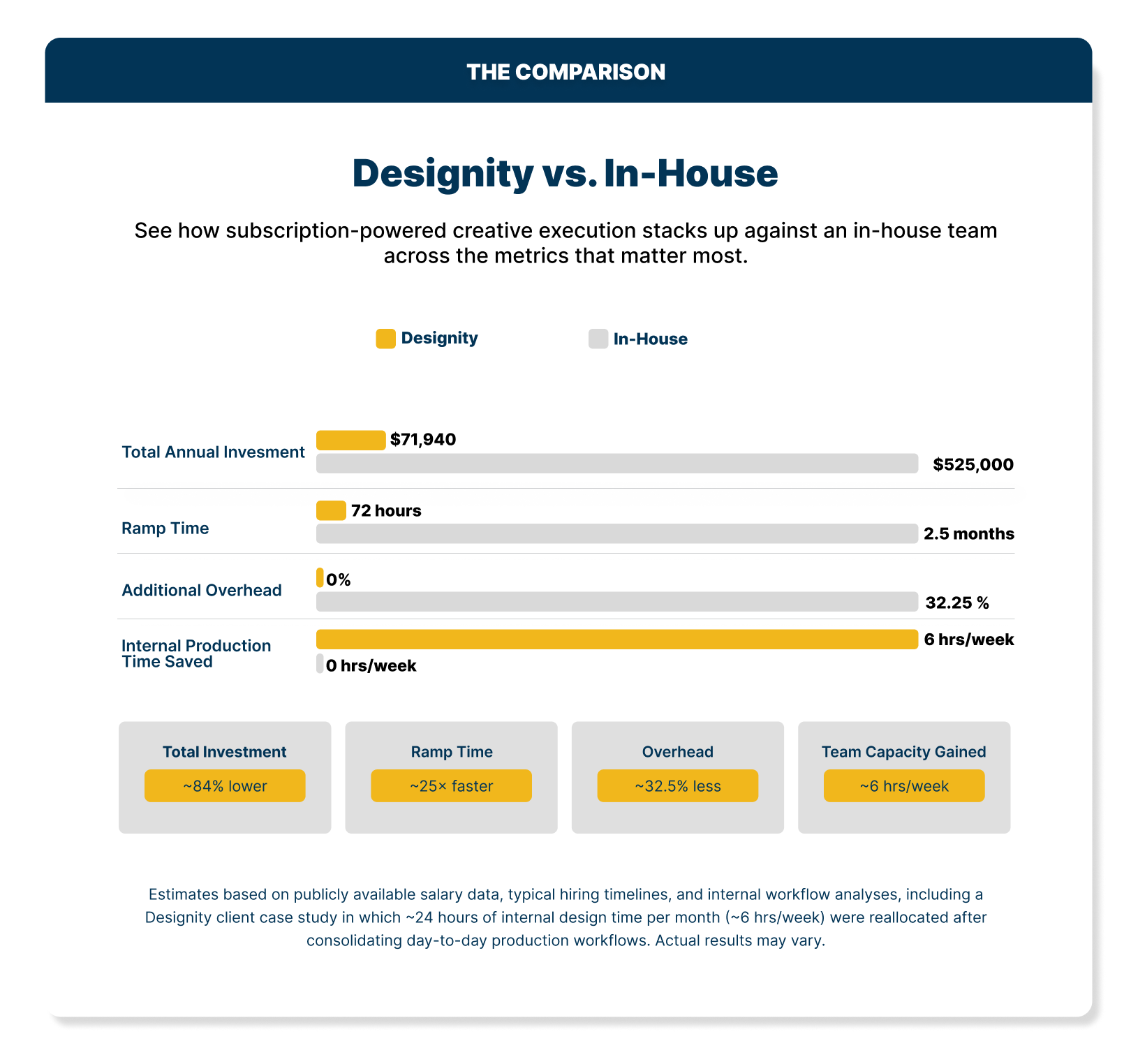
A full-time advertising strategist may make sense if you have constant campaign needs and an internal team ready to execute.
But they earn around $57,000 per year, according to ZipRecruiter, before benefits, tools, onboarding, and support roles like designers, copywriters, paid ads specialists, media buyers, analysts, and creative leadership.
2. Traditional Marketing Agencies
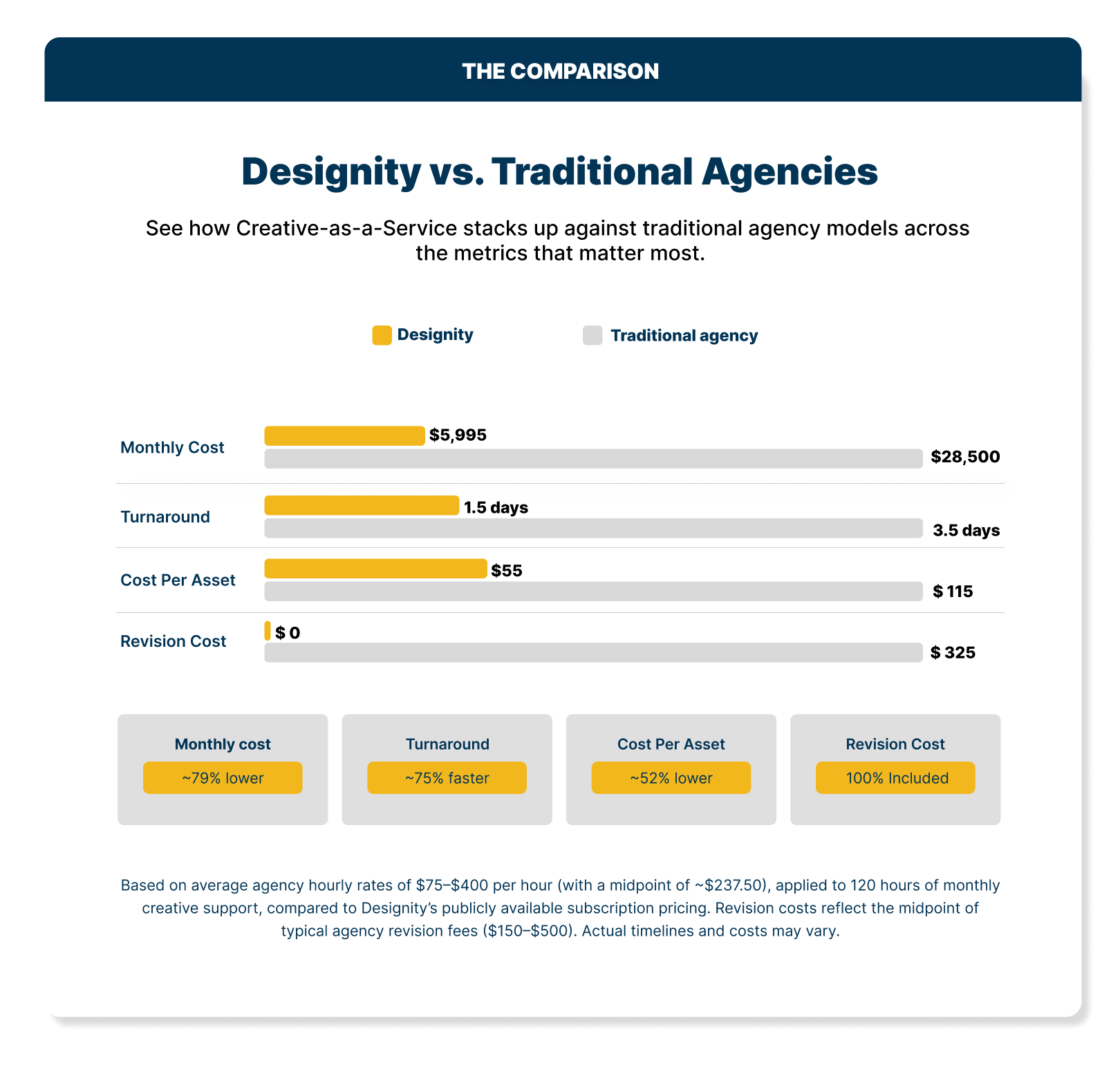
Agencies can offer strategy and execution.
The trade off?
They often come with expensive retainers (around $20,000 per month), slower timelines, rigid scopes, and less visibility into who is actually doing the work.
3. Freelancers
Freelancers can be useful for one-off strategy support, but the hidden cost is often your time.
You may need to source and vet 3 to 6 specialists just to run one campaign. Then come the briefings, the follow-ups, and the feedback loops that eat into your week before a single ad goes live.
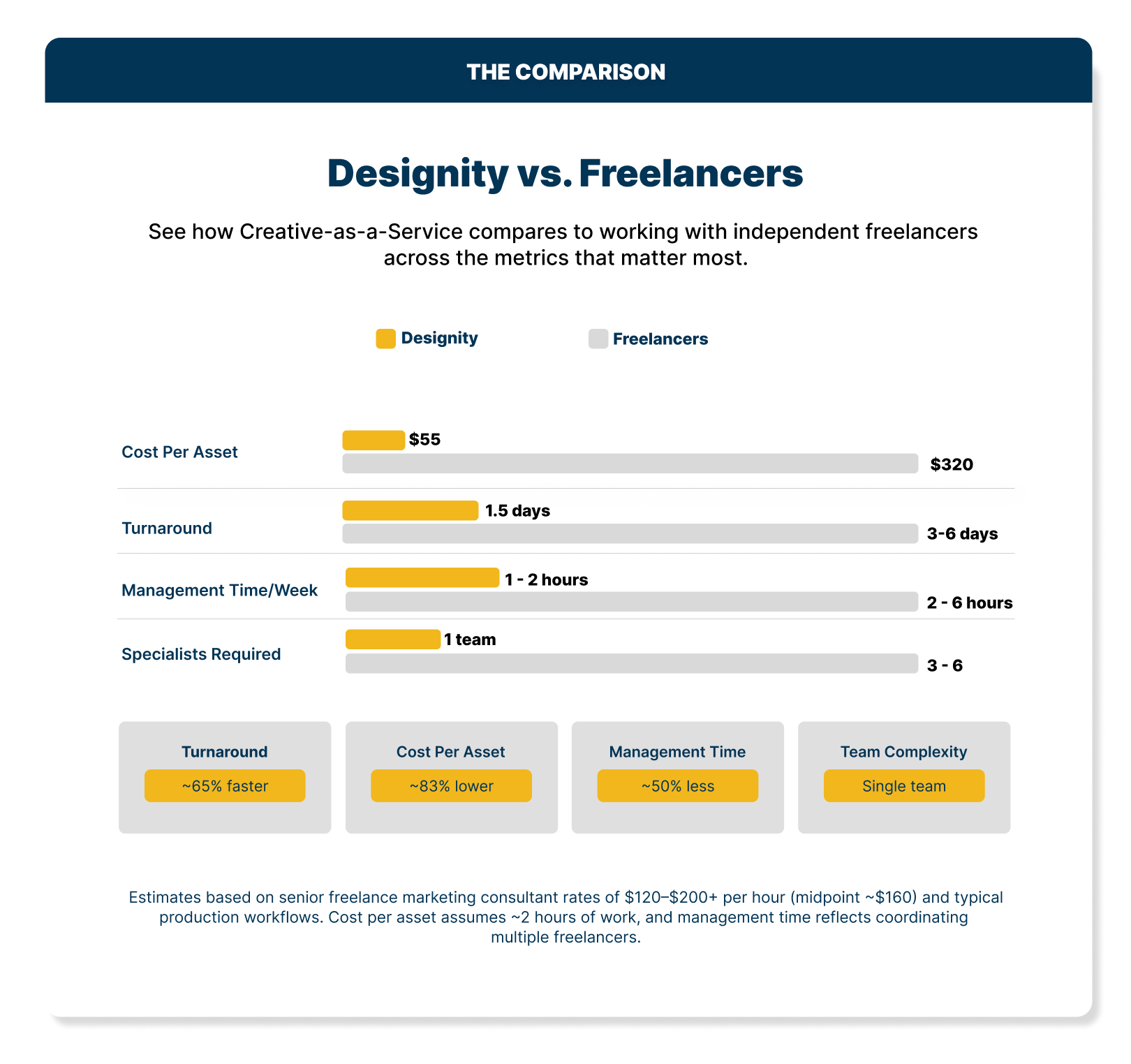
On the other hand, Designity’s Creative-as-a-Service platform gives you a Creative Director-led team and 100+ creative and marketing services in one monthly plan.
This way, you can scale without building an in-house team or juggling a patchwork of vendors.
5. Write a Clear Advertising Strategist Job Description
Your job description should explain what the strategist will own and support.
Include responsibilities like:
- Audience research
- Campaign planning
- Channel recommendations
- Messaging strategy
- Budget guidance
- Creative brief development
- Performance analysis
Then separate must-have skills from nice-to-have skills, such as experience with Google Ads, Meta, LinkedIn Ads, TikTok, YouTube, programmatic, or traditional media.
6. Source Candidates Through the Right Channels
Job boards can help, but they should not be your only source.
Look through LinkedIn, marketing communities, referrals, industry groups, agency networks, and specialized recruiting platforms.
Advertising strategists often come from agencies, in-house marketing teams, media planning roles, creative strategy roles, or performance marketing backgrounds.
If speed matters, consider a specialized hiring partner or on-demand marketing services provider to access strategy and execution faster.
7. Standardize Your Interview Process
Before interviews begin, align your team on what you’re evaluating: audience research, strategic thinking, channel knowledge, creative judgment, analytics, communication, and collaboration.
Ask each candidate the same core questions, such as:
- “How would you improve a campaign with strong traffic but low conversions?”
- “How do you choose the right advertising channels?”
- “How do you turn audience research into campaign messaging?”
You’re looking for how they think.
8. Review Their Work and Plan Onboarding
Ask for campaign examples, case studies, creative briefs, testing plans, or reporting samples.
A strong candidate should explain the goal, audience, insight, channel strategy, creative direction, budget logic, results, and what changed after launch.
Once hired, give them access to past campaign data, brand guidelines, audience research, analytics tools, creative assets, sales feedback, and current marketing goals.
The smoother the onboarding, the faster they can improve your campaigns.
Sounds like a lot of work right?
Fortunately, with Designity, you can get advertising strategy and execution without hiring at all. In fact, you can get a fully onboarded Creative Director-led team within 72 hours.
Designity: Advertising Strategy Without the Full-Time Hire
Hiring one strategist can help. But advertising usually needs more than strategy alone.
You also need the people who can turn that strategy into scroll-stopping ads, sharp messaging, landing pages, paid campaigns, videos, graphics, and performance-driven creative.
With Designity, you get a full-stack, Creative Director-led team starting at $5,995/month.
That includes:
- A dedicated Creative Director to guide strategy, creative direction, and campaign alignment
- Creative Project Managers to handle timelines, feedback, and approvals
- Paid advertising specialists to support campaign planning and execution
- Top 1% global creatives and marketers across design, copy, video, motion, web, and more
- Access to 100+ creative and marketing services under one roof
- Flexible month-to-month plans with no long-term lock-ins
- A 2-week trial with no upfront payment
So instead of hiring one advertising strategist and then filling every execution gap around them, you get strategy, creative direction, and full-stack advertising support in one flexible plan.
Book your demo today and unlock a 2-week trial to test drive Designity’s advertising and creative services.