









Most brands generate plenty of ideas. What often goes missing is a clear sense of conviction.
Trends get adopted. Logos get adjusted. Taglines get refined. Yet the brand still struggles to feel like something real.
Voice lives in one document.
Design lives in another.
Somewhere between the two, personality fades into the background.
In 2026, brand personality takes shape through coherence. Through language that knows what it stands for and visuals that carry the same intent.
When voice feels considered and design moves with purpose, identity becomes unmistakable.
The brands gaining traction right now show up with a point of view. That presence, expressed consistently across every touchpoint, is what people remember.
Below, we'll break down how to express brand personality through design and voice, with real-world examples.
7 Principles for Expressing Brand Personality (With Examples)
Here’s how voice and design come together to shape a brand’s personality:
1. Voice as Your Visual Backbone
Before color. Before type. Before the logo you spent three weeks pixel-nudging. There’s the thing audiences actually meet first: your voice.
If your brand were a person, how would they talk?
More importantly, would anyone lean in or quietly look for the exit?
Modern identity starts with narrative. Not the origin story you pitch investors, but a living tone architecture:
- The emotions you evoke
- How you show up in a conversation
- What you deliberately choose not to say
- The energy people feel after engaging with you
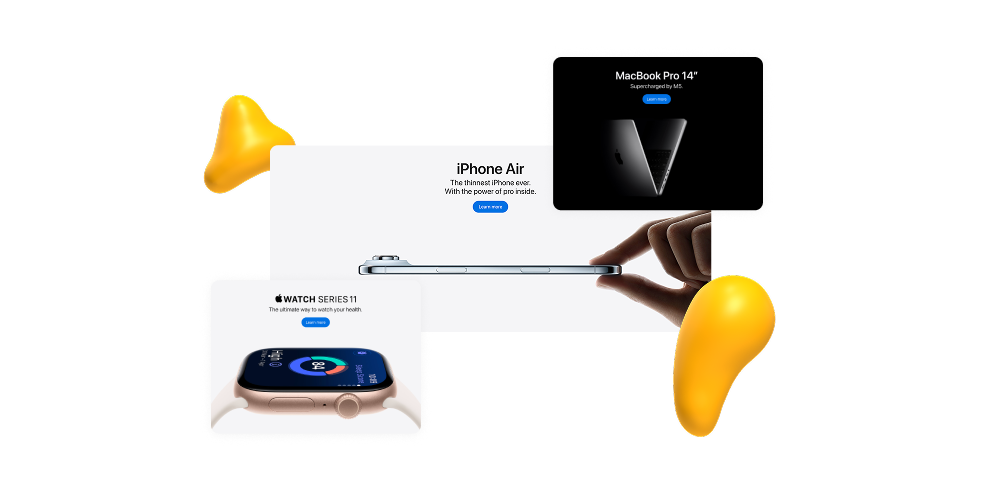
Example: Apple’s voice communicates restraint, confidence, and clarity long before you see a product. Short sentences. No exclamation points. No filler. No slogan needed. That discipline carries through everything, from typography and layout to a consistent, emotionally resonant brand presence.
2. Design That Speaks in Sentences
Good design is legible. Great design communicates.
Typography, layout, and visual rhythm should carry tone of voice before a single word appears. Structure, warmth, and momentum show up through choices made on the page.
A symmetrical grid suggests restraint.
Generous whitespace creates a sense of thoughtfulness.
Sharp angles add tension.
Rounded corners soften authority.
Every alignment, margin, and rhythm contributes to how your brand comes across, whether you plan for it or not.
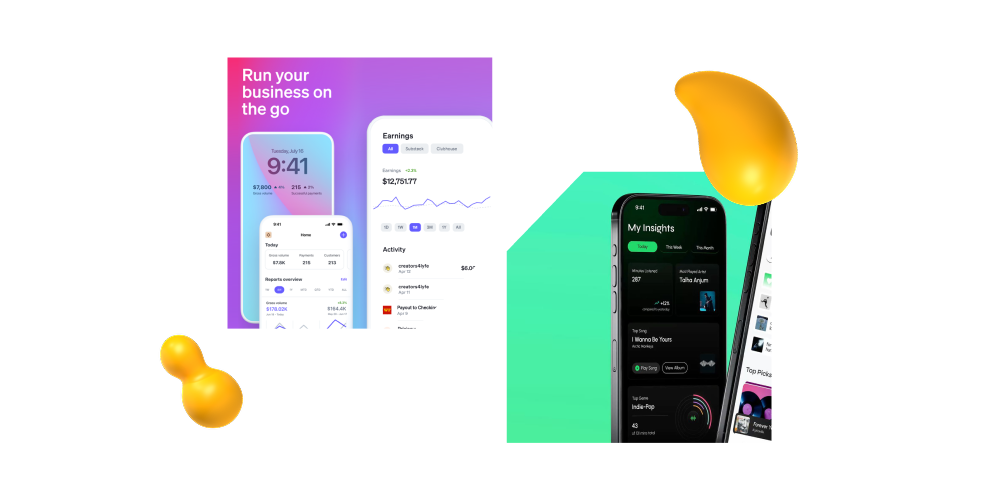
Example: Stripe’s interface relies on structured layouts, clear hierarchy, and generous spacing to signal control and reliability. In contrast, brands like Spotify lean into motion, contrast, and flexible layouts to express energy and cultural relevance.
3. The Marriage of Message & Medium
This is where brand expression comes together. Words and visuals stop working in parallel and start shaping the same idea.
Voice should guide design decisions.
Design should reinforce what the voice is trying to convey.
Tone of voice shows up visually when systems are aligned:
- An optimistic voice pairs with palettes that feel open and expansive
- A confident voice benefits from clear hierarchy and decisive structure
- A technical voice calls for precision in microcopy and layout
- A playful voice allows motion and flexibility to bend the grid
Brand identity doesn’t live in any single asset. It takes form through how language and visuals interact over time.
Example: Mailchimp’s friendly, conversational voice is supported by warm colors, expressive illustration, and loose visual rules that feel approachable without being chaotic. The words and the design carry the same personality, even when separated.

4. Imagery That Speaks the Brand’s Native Language
Instead of prescribing rules like “natural light” or “candid shots,” start by defining the emotion your visuals need to evoke. Ask what the imagery is meant to do:
- Invite people in
- Challenge assumptions
- Celebrate imperfection
- Signal precision or craft
This goes beyond aesthetics. It’s about meaning. Every image should earn its place by reinforcing the brand’s point of view.
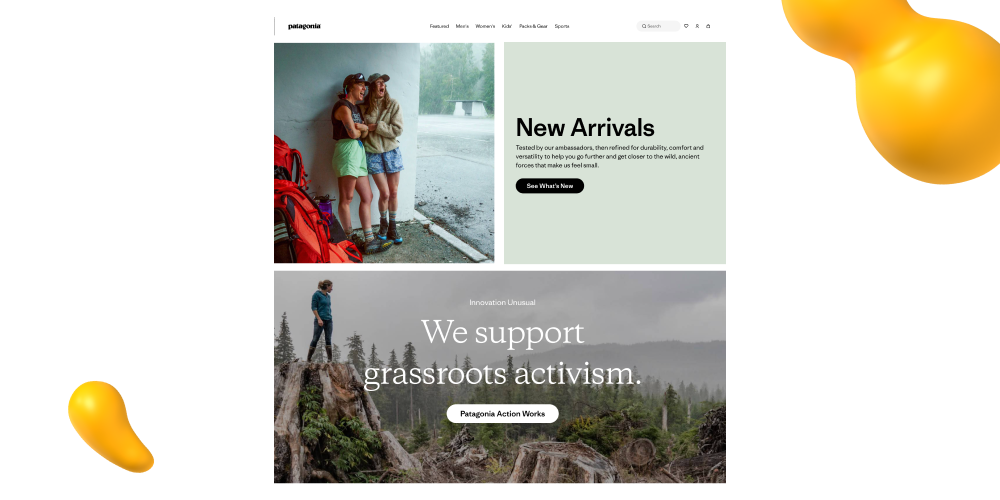
Example: Patagonia’s imagery consistently reflects values of environmental respect, resilience, and authenticity. The visuals feel lived-in and purposeful, aligning naturally with the brand’s voice and beliefs rather than chasing polish for its own sake.
In a world flooded with AI-generated visuals, the brands that stand out are the ones that know why an image belongs, not just that it looks good.
5. A Voice System That Thrives in Every Format
If your brand sounds polished in a manifesto but awkward on TikTok, you probably have an inconsistency issue.
A modern brand voice needs range without losing its core character. It should flex across platforms the way a good actor moves between roles, recognizable even as the delivery changes.
That means defining how your voice shows up in different moments:
- How you celebrate in launch emails and product reveals
- How you empathize in support tickets or difficult conversations
- How you tease in social microcopy or packaging
- How you educate in blog posts and product pages
A voice system should do more than describe tone. It should demonstrate it, clearly and repeatedly, wherever the brand appears.
Example: Duolingo’s voice stays playful and slightly irreverent across social, product messaging, and education. The tone adapts to the format, but the personality never disappears.

6. Design Decisions That Reinforce Narrative
A visual identity should be able to answer the same questions your copy does.
Who are we?
What do we believe?
What kind of world are we inviting people into?
When a design system reflects those answers, it becomes expressive rather than decorative.
Minimalist brands communicate restraint through intentional silence and carefully paced layouts.
Brands built around innovation use motion, depth, and interaction to suggest progress and momentum.
Heritage-driven brands rely on steady rhythm, considered spacing, and familiar visual cues that feel earned over time.
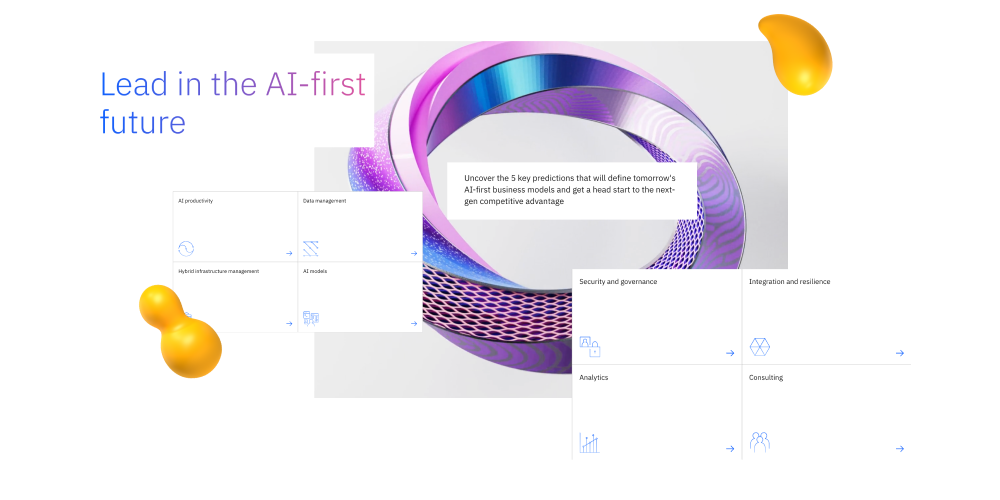
Example: IBM’s design system reinforces its narrative around trust, intelligence, and longevity through disciplined grids, restrained color use, and consistent typographic structure. The visuals quietly support the brand’s point of view without needing to explain it.
7. The Feedback Loop: Voice ↔ Design
Voice shapes design.
Design shapes voice.
Neither operates independently for long.
When a brand feels fragmented, voice and design usually were developed along separate paths. Copy evolved in one direction. Visuals evolved in another. The distance grew quietly.
Alignment comes from bringing those systems back into conversation.
Every new expression should pass a simple test:
Do the words and visuals tell the same story through different senses?
A headline, a landing page layout, a packaging mockup, or a motion frame should reinforce the same point of view. When they don’t, refinement becomes part of the process.
Brands that endure treat voice and design as a continuous feedback loop, allowing each to sharpen and inform the other.
{{cd-matthew}}
FAQs
Here are the answers to three commonly asked questions related to brand personality:
1. What Is Brand Personality?
Brand personality is the set of human characteristics and personality traits a brand expresses through its brand voice, visuals, and behavior.
It’s one of the core elements of brand identity, shaping how a brand sounds on social media, shows up in marketing materials, and interacts with customers.
A clear brand personality helps people relate to a brand as if it were a person, not just a product.
2. What Traits Make Up A Strong Brand Personality?
A strong brand personality is built from clearly defined dimensions of brand personality, such as confidence, warmth, authority, creativity, or playfulness.
These traits form a brand personality framework that guides tone of voice, design choices, and messaging.
When brands define these traits intentionally, they create a personality that resonates with their target audience and feels consistent across channels.
3. Why Does Brand Personality Matter for Building a Brand?
Brand personality plays a critical role in marketing strategy, customer service, and meeting customer expectations.
It helps brands connect emotionally with target customers, stand out in crowded markets, and build trust over time.
Brands that clearly define their brand personality create more cohesive experiences across social media, campaigns, and touchpoints, making it easier to build a brand people recognize, remember, and choose.
Bring Voice and Design Together with Designity
Brand identity is no longer something you set and forget. It evolves as platforms shift, formats change, and expectations rise.
The brands that stay relevant do one thing well: They keep voice and design working together.
That level of coherence requires more than guidelines. It requires creative leadership.
Designity helps brands do exactly that. With a dedicated Creative Director and an on-demand team drawn from the top 1% of creative and marketing talent, we turn identity into a living system, not a static document.
If you’re ready to create a brand personality that’s aligned and future-ready, book a demo and try Designity’s 100+ creative services risk-free for two weeks (no upfront fee).
Keep Exploring:
- Get expert tips on how to align your digital marketing strategy with sales and product teams.
- Discover the ROI behind Designity’s flexible month-to-month plans.