




AI can give a creative team more possibilities.
But who decides which ones are worth making?
For Designity Creative Director Marcus Viljoen, that decision stays human.
He uses AI to support research, explore ideas, and move through early creative work faster.
Understanding the brand, reading the client relationship, and choosing a direction still require human judgment.
We sat down with Marcus to discuss his creative background, where he draws the line with AI, and how his team combined technology and human expertise for a Pompeian presentation opener.
Here’s what he had to say.
Meet Creative Director Marcus Viljoen
Marcus’s background spans photography, communication, editorial design, digital experiences, and branding.
His interest in the thinking behind the work eventually brought him to creative direction:
1. How Did You Become a Creative Director?
My background is very diverse. My journey started in photography and communication, then moved into editorial and design.
Eventually, with everything moving to digital, I followed that trend and moved into digital, UX/UI, branding, and creative leadership.
What naturally moved me toward creative direction was realizing that I was less interested in just making something beautiful and more interested in understanding why we were making it.
Who is it for?
What are they supposed to feel?
What problems are we solving?
And how do all these different creative pieces work together?
I’ve also trained and worked in areas like yoga and wellness, which might seem very different from what I’m doing now, but they really shaped how I lead.
They taught me to listen, observe, create space for people, and understand that everyone works differently.
Today, I see my role as a Creative Director as connecting strategy, people, and creativity.
I don’t have all the answers. I’m here to ask the right questions and help the team arrive at a stronger answer together.
2. How Would You Describe Your Creative Leadership Style?
I would describe my leadership style as collaborative, very curious, and very human. Very heart-centered.
I like to create enough direction that people feel clear about where they’re going, while giving them space to pursue their talent. I love creatives to surprise me in how they get there.
I don’t believe the Creative Director should be an island. My job is to create a beautiful community on the island.
Marcus explores this approach further in his guide to giving creative feedback.
3. What Drew You to Designity’s Creative Model?
What drew me to the Designity model was the combination of ownership and collaboration.
We have a dedicated Creative Director who really gets to know the client and becomes that consistent strategic partner. But behind that person is a much broader network of experts and talent.
I love that because no Creative Director can, or should, be the best designer, writer, strategist, developer, or thinker in the room.
This model lets me ask, “What does this problem actually need?”
Then I can bring the right people together around it.
That makes me less of a gatekeeper and more of a connector.
AI-Enabled Creative Starts With Human Judgment
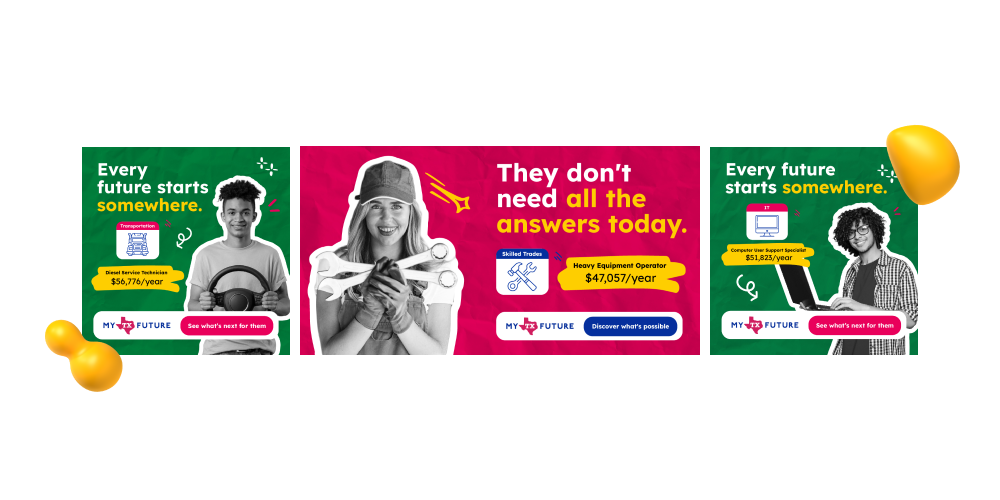
For Marcus, AI supports exploration and production. The brand’s point of view, strategic position, and creative direction remain human-led:
4. Where Does AI Help in Your Creative Process, and What Do You Keep Human?
I think of AI as an accelerator and an exploration partner.
It’s incredibly useful in the early process: looking at research, exploring territories, challenging our assumptions, and helping us generate variations.
It helps with quick storyboarding, prototyping, and summarizing information.
It helps us get from a blank page to something we can react to much faster.
But I keep the judgment human.
AI doesn’t decide whether an idea feels right for the brand. It doesn’t understand the client relationship the way we do.
It doesn’t notice when somebody becomes uncomfortable when an idea is presented, and it doesn’t understand the cultural nuances behind why something might resonate.
For me, AI can help us create more possibilities, but humans decide which possibility deserves to exist.
5. How Do You Decide What AI Touches on a Client’s Brand?
I ask whether AI is enhancing the thinking or starting to replace the thinking.
If we’re using it to explore composition, prototype an idea, accelerate production, or help us see possibilities, that’s great.
But if we’re asking AI to define the brand’s point of view, the taste, the emotional truth, or the strategic position for us, I think that’s where we’re crossing the line.
I’m also very conscious that every client has a different comfort level with AI.
Part of being a Creative Director is understanding those boundaries rather than applying the same AI workflow to every single brand.
The technology should adapt to the brand. The brand shouldn’t have to adapt to the technology.
For more on evaluating that balance, explore Designity’s guide to AI-powered creative services.
6. What Would You Say to a Marketing Leader Worried That AI Is Replacing Creative Judgment?
I’d say AI makes creative judgment more important, not less.
We now have an almost unlimited ability to generate things. The scarce resource isn’t the output anymore. It’s knowing what is worth making.
Someone still needs to understand the audience, recognize what feels generic, protect the brand, and connect creative decisions to business objectives.
Then we can say, “This is the direction we should pursue, and here’s why.” That is creative judgment.
AI might help us get to ten directions faster, but someone still needs the taste and strategic understanding to know that direction number seven is the one worth developing, rather than number one.
“After working with Designity for almost 5 months, the Designity team has helped us to accelerate the development of our visual brand story. As a VP of Marketing having a creative director who understands our brand and is a trusted partner in strategy and execution is invaluable.”
AI-Enabled, Human-Led Creative in Action: Pompeian
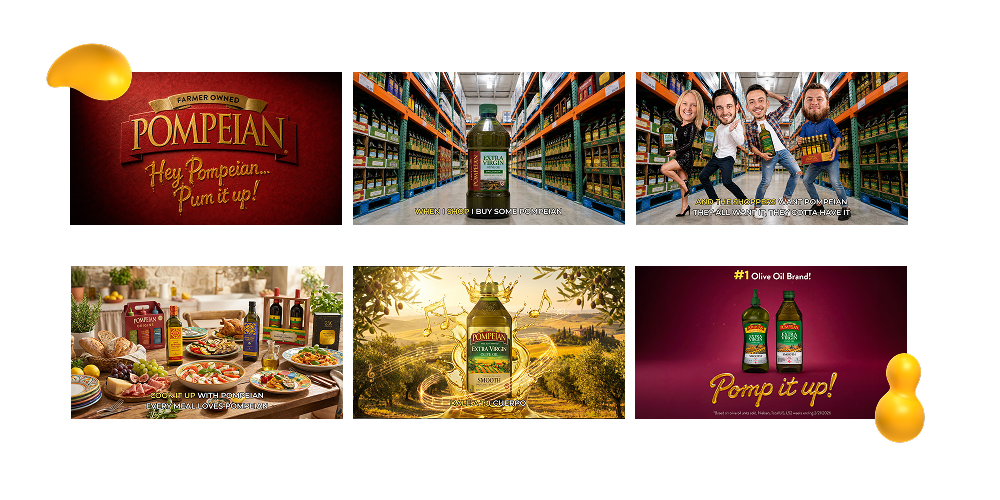
Marcus walked us through “Pump It Up,” a Pompeian presentation opener that brought together motion graphics, music, product storytelling, and live performance:
7. Can You Set the Scene for the Pompeian Project?
Pompeian is one of our clients, and they came to us to create a corporate video for a meeting with Costco.
They didn’t want a boring meeting. They wanted to set the tone: walk in, play the video, set the energy, and get Costco excited.
The campaign was called “Pump It Up” because they had this new pump bottle, and they really loved the song “Macarena.”
They wanted us to generate a script with words that incorporated “Pump It Up” and the Pompeian brand, then use ElevenLabs to generate sample songs so we could get a voiceover artist to produce the actual song with those lyrics.
I was involved, along with the previous Creative Director. We also had Oscar working on the video and Haley Nelson doing the voiceover.
The goal was to transform a traditional product presentation into something entertaining: a brand experience that celebrated the new product launch, engaged the merchant, and generated excitement before the meeting began.
We combined motion graphics, product storytelling, and choreography into an opening film that employees would perform alongside live.
Every scene was carefully timed and aligned with the custom soundtrack and live choreography. Rather than creating a standard promotional video, the animation became part of the event itself.
It guided the product reveals, supported the performance, and maintained the energy throughout the opening sequence before handing over to the presentation.
8. What Was the First Creative Decision That Shaped Everything That Followed?
It’s always together with the client. We brainstorm together and take in the brief. Then, as Creative Directors, we digest it and see where it can go.
We take in the information, develop the timeline, and start creating mood boards and creative territories for the client.
From there, we create initial concepts. We would provide two to three initial concepts, and the client would choose the direction. Then we start storyboarding.
Creative direction starts at the beginning and becomes our north star for where the project will end.
As a Creative Director, it’s our job to keep looking at that north star and see whether we’re diverging from the road.
9. Was There a Moment When Something Wasn’t Working? How Did You Handle It?
This was a time when another Creative Director was handing over a project, and I had to complete it.
I was coming in from a place of the unknown and trying to make sure the deliverable was still aligned with what the client was expecting.
In the end, it was very successful. The Creative Director handed it over beautifully, and I was able to take it on and get it over the finish line.
That’s also what’s nice about Designity.
We all have PTO and go on leave, but our clients will always have a Creative Director.
If I go on leave, someone will stand in and make sure the projects are going smoothly. Because of the Creative Director’s handover, they’re able to do that.
We all have each other’s backs.
10. What Are You Most Proud of in This Project?
What I’m proud of is that my client is happy. They strengthened their relationship with Costco, and in some way, I was part of that.
With any client, sometimes it’s not award-winning work, but our clients are extremely happy.
They’re putting it out in the world, and they’re confident it’s going to bring them a return on investment.
If they have that return on investment, that makes me proud. It means I’m doing what I have to do to make sure my clients get the best.
11. How Did the Client React When They Saw It?
Who doesn’t love the “Macarena”?
From the get-go, it set the project off on a very fun note. Everyone had loads of fun.
I believe every project should be fun, or have an energy behind it that resonates with people.
If it resonates with you and comes from within, it will resonate with the audience as well. They will feel that excitement through what we’ve created.
Explore Designity’s motion graphics and video services for more on bringing these disciplines together.
What Human Creative Leadership Gives Marketing Leaders
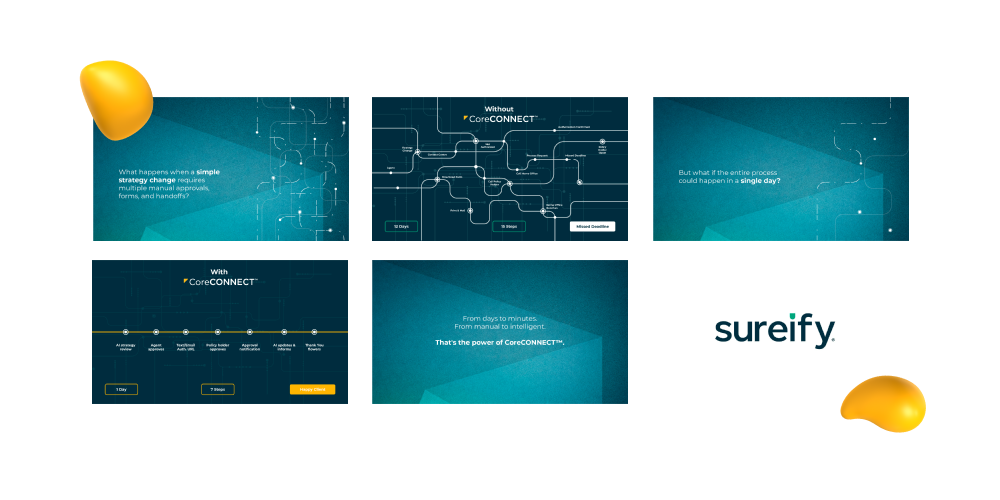
Beyond choosing ideas, Marcus sees a dedicated Creative Director as someone who builds brand context over time and shares the responsibility for creative decisions:
12. What’s One Thing Marketing Leaders Should Know About Working With a Dedicated Creative Director?
A great Creative Director doesn’t just improve your creative. They reduce the amount of creative decision-making that the marketing leader has to carry.
We learn the brand. We understand what you respond to. We understand your audience. We start to build context over time.
Eventually, you’re not re-explaining your brand every time a new project starts.
You have someone sitting between your business objectives and the creative team who already understands both worlds.
That continuity is incredibly valuable.
13. What Would You Tell a Marketing Leader Who’s on the Fence?
You’re not just hiring someone to make things look better. You’re bringing in someone who thinks alongside you.
Someone who can challenge your brief, ask questions you might not have considered, translate your business problems into creative opportunities, and bring together the right people to execute them.
I think the best Creative Director relationship eventually feels less like a client and vendor relationship and more like, “This person is part of my team.”
We’re an extension of their team, and that’s where the really good work starts.
How Designity Keeps AI-Enabled Creative Human-Led
Marcus’s approach to AI starts with one important question:
Is AI enhancing the thinking or replacing it?
At Designity, dedicated Creative Directors like Marcus lead the strategy, bring the right creative experts together, and make sure every decision stays true to your brand.
Because while AI can help teams move faster and explore more possibilities, it takes human expertise to turn those possibilities into creative work that actually makes an impact.
Looking for a creative partner who brings more than just faster production to the table?
Book a demo with Designity and explore our 2-week trial to see how AI-enabled workflows and human-led creative expertise can move your brand forward.