




Creative autonomy sounds great in theory.
But how do you give creatives room to explore while keeping every decision connected to a client's goals?
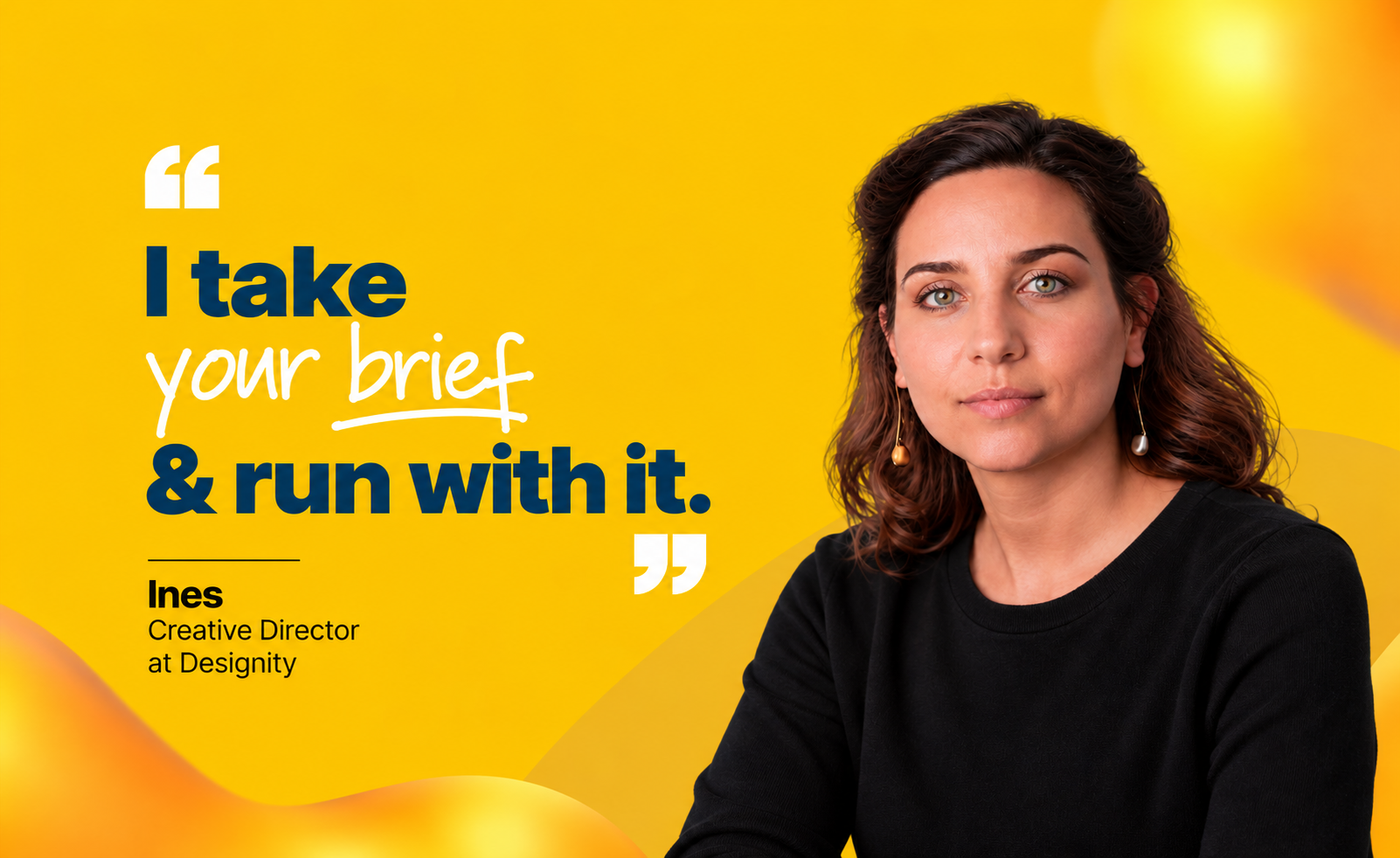
For Designity Creative Director Inês Felix, the answer starts with context, trust, and knowing when to step back.
Her approach gives specialists the freedom to bring their own ideas to the table while keeping the bigger picture in focus.
We sat down with Inês to talk about her career, her approach to creative leadership, and how she brought different audiences together through one campaign for Acuity.
Here's what she had to say.
Meet Creative Director Inês Felix

Inês's journey from graphic design to creative leadership has always been driven by curiosity and big-picture thinking.
1. How Did You Become a Creative Director?
I believe my path to becoming a Creative Director was actually quite organic.
I chose a degree in graphic design and advertising because I really wanted to be in the world of video and advertising.
I was fascinated by storytelling and by this idea that you can have something in your imagination, write it down as a script, and somehow bring that world to life. I thought that was amazing.
I've also always been someone who likes to explore different areas of creativity. At the time, at least in Portugal, concepting wasn't really something you could study as its own discipline.
So I became really interested in brands and how they communicate visually, which eventually took me to Barcelona, where I did my master's in branding and packaging.
But I was never just thinking, "What should this look like?" I always wanted to understand why. What's the idea? What's the story? Why does this make sense for this particular brand or product?
Then I moved into agency work at a really interesting time in Portugal, when social media and digital were completely changing how brands communicated.
Suddenly, we weren't thinking about just one ad or one medium anymore. We had all these different touchpoints, and I loved connecting all of them.
I think my brain naturally zooms out. I want to see the big picture and how the idea connects to the brand, how it becomes a campaign, and how it lives across different channels.
So I moved into art direction and creative direction quite early in my career. There was never really a moment when I felt, "Okay, now I want to become a Creative Director."
The way I was already thinking naturally took me in that direction.
Creative Autonomy Starts With Clear Direction
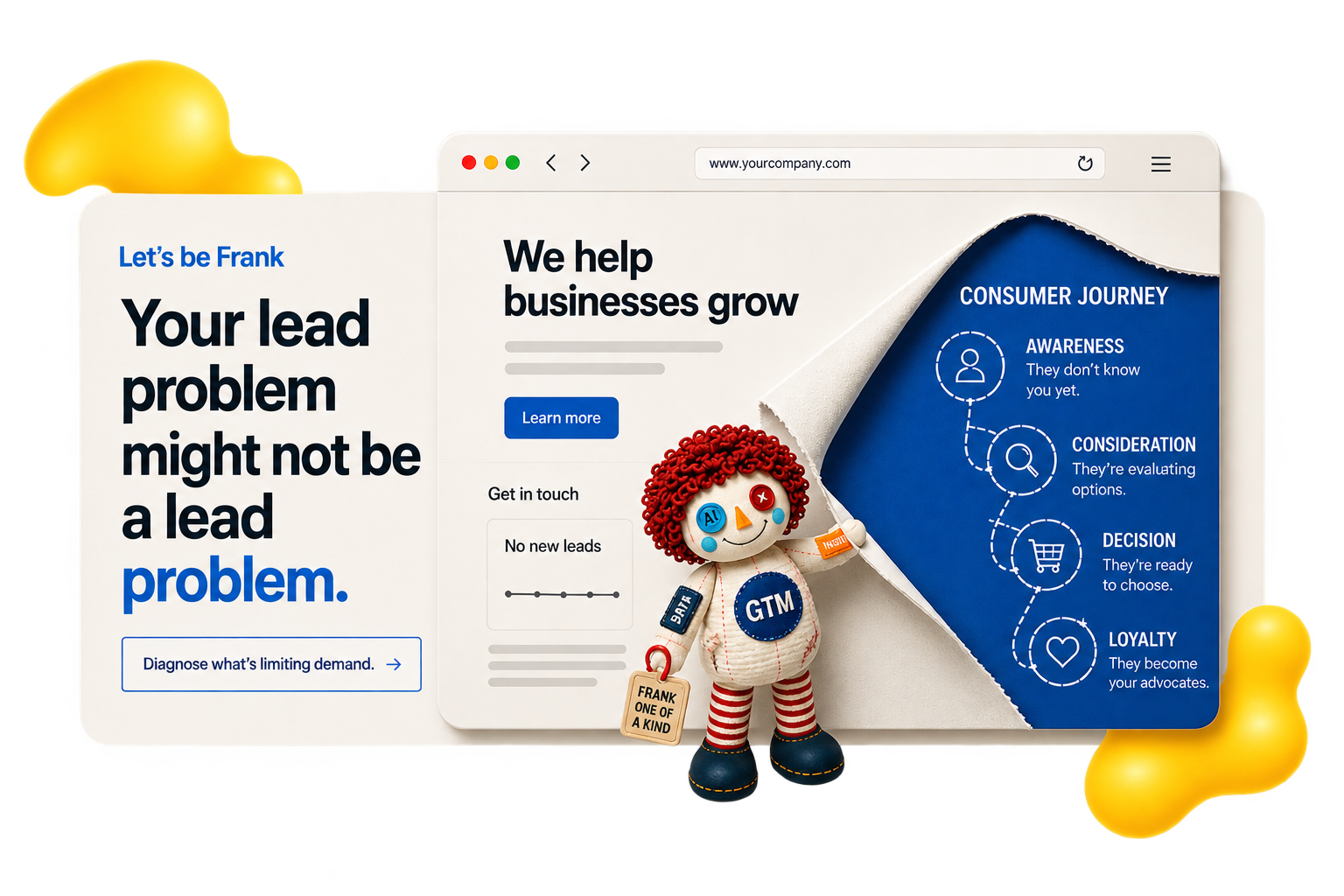
For Inês, creative autonomy begins with clear expectations and the freedom to explore.
2. How Would You Describe Your Creative Leadership Style?
I'm definitely not the kind of Creative Director who wants to sit behind the creative saying, "Move two pixels to the right. Move five to the left."
I really want to give people context.
What's not working?
Why is it not working?
What are we trying to make someone feel or understand?
Then I give them room to solve it.
My job is to give enough direction that we're solving the same problem, but enough freedom so they can still surprise me in the end.
3. What Drew You to Designity's Creative Model?
The access to different kinds of talent from all over the world.
Different cultures shape the way people see design, the things we consume, and even what we consider good creative. I find that really exciting.
It means more perspectives, more experience, and more brains at one table.
In a traditional agency, you often have a small team with a specific set of skills, and sometimes you're adapting the work to the resources you have available.
Here, I can think, "Okay, this project needs someone really strong in motion," and I can build a team around what the project actually needs.
Honestly, as a Creative Director, that's pretty exciting. It's like a big playground for us, like a candy store for Creative Directors.
I can think about what the idea needs first and then find the right people to bring it to life.
4. What's the First Thing You Do When a New Creative Brief Lands?
The first thing I ask is, "Do we actually have a good brief?"
Because everything starts there, right?
Do I understand what they're trying to achieve? Who are we talking to? What should success look like?
From there, I can go in two directions.
If the information is there in the brief, I start digging into the brand, the audience, the market, the competitors, and what we've done before.
If there are any gaps, I go back to the client. Sometimes a good conversation is much more valuable than another page in the brief.
Part of being a Creative Director is also reading between the lines and understanding what the client is asking for versus what they actually need. Sometimes there's a big difference.
Eventually, everything needs to lead to one very simple question: "What are we actually trying to solve here?"
Once I have that clear, I translate everything for the creative in written context, but also visually, with references, inspiration, territories, things to avoid, and sometimes things to explore.
By the time I bring it to the creative, I want to give them a problem worth solving, rather than just a list of deliverables.
5. How Do You Make Sure a Creative Brief Lands With a Specialist?
For me, a good handoff is really about context.
Once again, I want the creative to understand what we're making and why we're making it.
I usually walk them through the client, the problem we're solving, the audience, what we've been learning from the research, and where I see the creative opportunity in that specific brief.
Because we're visual people, I also like to make the direction visual, with references, mood boards, and things we can learn from.
But most importantly, we're humans. I like when a briefing becomes a conversation rather than me just depositing information.
I want to hear their first thoughts, what they're reacting to, and what they're already questioning. That's also very important.
It's funny because sometimes, just through that first conversation, ideas already start coming to the table.
That's when I know the creative is already thinking through the brief with me.
For me, a successful handoff means we're completely aligned on the problem, but there's still freedom in how we can solve it.
This approach also comes through in Designity's guide to giving creative feedback, which explores how Creative Directors can encourage independent thinking.
6. How Do You Earn Enough Client Trust to Lead Creative Decisions?
I think clients start directing every detail when they don't feel confident that someone else is protecting the outcome.
Trust isn't something I ask them for. It's something I try to earn, right?
That means understanding their business, explaining the thinking behind our decisions, being honest when something isn't working, and sometimes pushing back, but always being able to explain the why behind it.
Eventually, the conversations change.
Instead of "Make this bigger," or "Move this," or "Change this color," it becomes more, "Here's the problem we're having. What do you think?"
And that's the moment I know I've earned the client's trust.
Creative Autonomy in Action: The Acuity Campaign
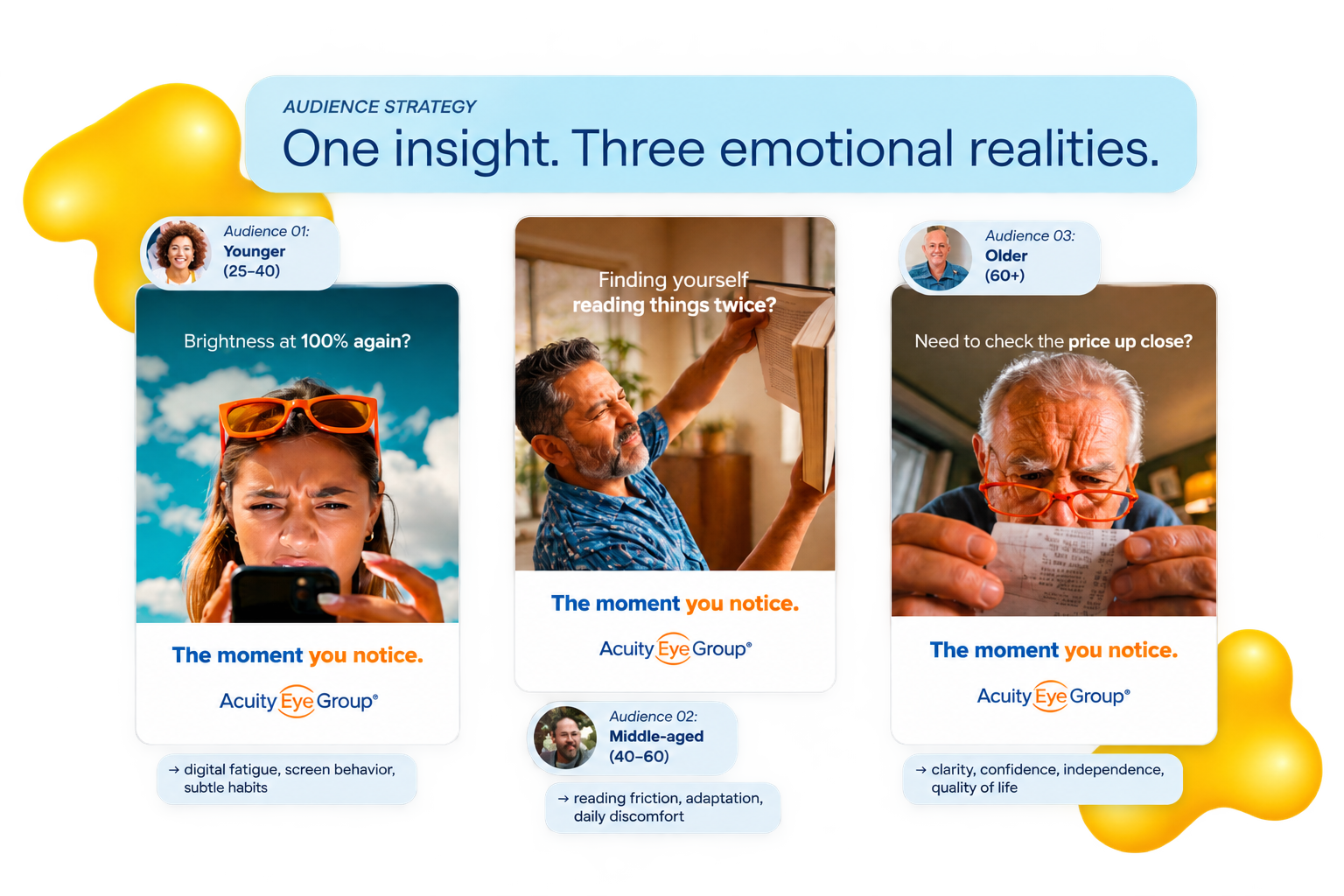
See how Inês brought three distinct audiences together under one creative campaign.
7. Can You Set the Scene for the Acuity Project?
Acuity is an eye care group in Southern California, and they came to us wanting to move away from isolated ads and create more of a full marketing campaign, one system that could actually drive conversion.
That was the goal for the client.
The interesting challenge was that we weren't really talking to one audience.
We had people in their 20s and 30s thinking, "My eyes are fine. I'll deal with that later."
Then people in their 40s and 50s start to notice some changes, and older audiences may already be actively looking for care.
So the same brand needs to create a need for one person while answering an existing need for another.
The interesting part for me was:
How do you create one strong campaign idea without pretending all these people care about eye care for the same reason?
Because they have different needs.
8. What Was the First Creative Decision That Shaped the Campaign?
Pretty early on, I didn't want us to solve it by creating three completely different campaigns.
Yes, the audiences are different, and the messaging and channels need to be very flexible, right?
But there had to be one bigger human idea connecting all of them.
We started thinking less about eye care as a medical service and more about vision as the way you experience your life.
Suddenly, we had a much bigger creative playground.
We could talk about little things people see, things people experience, things they miss or enjoy, and then connect eye care back to something human, rather than always starting from a condition or "Book an appointment," for example.
9. Was There a Moment When Something Wasn't Working? How Did You Handle It?
I wouldn't say there was one dramatic "Oh no, this isn't working" moment.
It was more about realizing that the concept was so flexible, and there were so many ways we could play with it visually, that it could actually become dangerous for the creative.
Because suddenly, you want to do all of them, and we can't.
So a lot of my role became more about curation.
What actually belongs to this idea? What's clever but distracting?
What can scale across the campaign without becoming repetitive?
Sometimes creative direction is less about adding another idea to the table and more about knowing when you already have enough.
10. What Are You Most Proud of in This Project?
I'd say I'm most proud that we didn't confuse consistency with sameness.
We had three different audiences, different needs, different channels, and different levels of intent, right?
It would have been very easy to either make three disconnected campaigns or force the exact same message onto everyone just for the sake of consistency.
Instead, we created one idea strong enough to be flexible.
The younger audience could enter through convenience and everyday life, for example.
The middle-aged audience could enter through prevention, and the older audience could enter through trust and expertise.
But they were still living inside the same Acuity world.
And for me, that's what a campaign system should do.
The brand stays consistent, but the communication stays human. And that's very important.
11. How Did the Client React When They First Saw the Campaign?
The response was really, really positive.
What I loved was that they didn't just respond to how it looked. They understood the system we were presenting.
They could see how the idea could flex across different audiences and touchpoints without us reinventing the campaign every time.
And actually, it became bigger because it started to become the foundation for how the brand wanted to communicate and position itself going forward.
"The Moment You Notice" became the campaign tagline that we continued building the work around.
So we weren't just creating assets anymore. We started creating a platform for the brand that it could keep building on.
And that's always a really good moment for me because the client is buying into a way of thinking.
For more on keeping campaigns aligned across channels, explore why creative direction matters when outsourcing creative services.
Why Creative Autonomy Matters to Marketing Leaders

Inês shares how creative autonomy builds trust and gives marketing leaders more room to focus on strategy.
12. What's One Thing Marketing Leaders Should Know About Working With a Dedicated Creative Director?
A dedicated Creative Director doesn't just make the creative better. We remove all the creative decisions from the client's plate.
Marketing leaders already have a million things to think about, right?
They shouldn't also have to decide which image works better, what hierarchy is right, or how to translate a strategy into a visual idea.
A good Creative Director learns the brand deeply enough to become the creative extension of their team.
And I think the real value is when the client stops bringing solutions and starts bringing creative problems to us.
13. What Would You Tell a Marketing Leader Who's Unsure About Working With Designity?
I would tell them to try to give up a little bit of creative control.
You should absolutely have a voice, but give someone the context, the problem, and the goals instead of just the solution you already have in your head.
A good Creative Director might come back with something you weren't expecting.
And honestly, that's kind of the point.
"After working with Designity for almost 5 months, the Designity team has helped us to accelerate the development of our visual brand story. As a VP of Marketing having a creative director who understands our brand and is a trusted partner in strategy and execution is invaluable."
How Designity Turns Creative Autonomy Into Better Creative Work
Creative autonomy doesn't mean giving up control. It means trusting the right people to make the right decisions.
At Designity, dedicated Creative Directors like Inês provide strategic direction while giving specialists the freedom to explore ideas and deliver their best work.
For marketing teams, that means less time managing creative details and more confidence that every decision supports their brand and business goals.
Ready for a creative team that takes ownership, not just direction?
Book a demo with Designity and unlock a 2-week trial to experience our AI-enabled, human-led CaaS model.