









Great social media calendars take more than neat rows, color-coded posts, and a comforting sense of control.
They’re built on smart strategy and careful planning, but designed to bend when the internet inevitably does something unexpected.
On paper, everything can look flawless: posts scheduled, approvals signed off, social “handled.”
Then…
Culture shifts, a trend takes off, or the conversation changes overnight.
And suddenly, that perfect social media calendar feels… off.
Social media moves fast, rewards relevance, and punishes brands that stick to the plan at all costs.
In this guide, we’re breaking down why rigid calendars can backfire, what a flexible one looks like, and how to plan social content that’s structured enough to trust, and loose enough to move when it matters.
4 Reasons Why Teams Rely on Super Planned Social Media Calendars
Planned social media calendars don’t happen by accident, and that’s a good thing.
A strong calendar is the foundation of an effective social media marketing strategy.
It protects the brand, supports algorithm performance through consistency, and ensures clear, recognizable messaging for your audience.
Teams lean into structure for good reasons:
- Complicated approval workflows: Planning ahead keeps multiple stakeholders (brand, legal, compliance, and leadership) aligned and reduces risk.
- Stretched teams: Pre-scheduling content helps teams manage heavy workloads and limited resources.
- Leadership needs predictability: A clear calendar shows strategy, intention, and control.
- Same-day content feels risky: Planning safeguards brand voice and messaging.
And to be clear: you need a planned calendar. It’s what makes spontaneous posting possible, not optional.
The problem isn’t planning; it’s relying on it too rigidly.
When calendars become immovable, brands miss timely moments, trends, and real audience conversations.
Flexibility allows you to respond in real time, show personality, and stay relevant, without sacrificing consistency.
The strongest social strategies use planning as the foundation and spontaneity as the advantage.
How Overly Rigid Social Media Calendars Can Start to Work Against You
The downside of rigid planning doesn’t show up immediately. It builds quietly, usually when a calendar stops acting like a guide and starts acting like a rulebook.
Think of it like learning a dance routine: you need to know the steps by heart first.
That foundation is what allows you to add flair, improvise, and stand out when the moment calls for it.
But if you never move off-script, you miss that moment entirely.
Here’s what can happen when flexibility disappears:
- You miss timely moments: Industry news breaks, trends spike, cultural moments happen, and the calendar doesn’t budge. The conversation moves on without you, even though you had the structure in place to join it.
- Content starts to feel off: Pre-planned posts keep publishing even when the context has changed. The timing feels wrong, the tone misses the mark, and the message doesn’t land the way it should.
- Performance flattens: When calendars don’t evolve based on results, teams repeat the same formats and ideas. The plan stays intact, but learning slows because the social media strategy isn’t adapting to what the data is telling you.
- Teams get frustrated: Social teams want to move faster and respond in real time, but feel locked in by approvals made weeks ago. The calendar stops enabling strong work and starts constraining it.
Don’t get me wrong:
Creating a social media calendar that’s planned is essential. They create consistency, protect your brand, and give teams a strong foundation.
But the brands that stand out are the ones that know the routine well enough to pivot, using structure as a base, not a boundary.
So, What Does a Flexible Social Media Calendar Look Like?
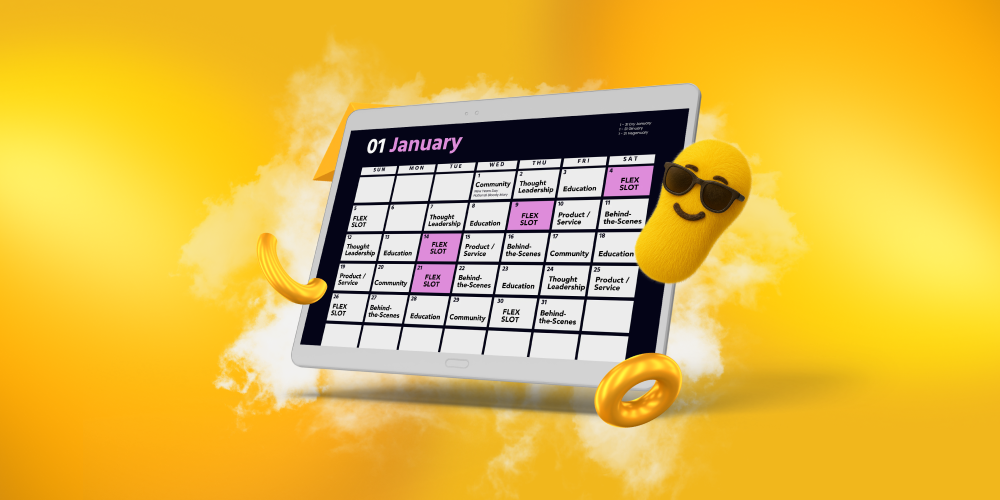
A flexible social media calendar isn’t chaotic, last-minute, or “winging it.”
It’s a strong strategic framework, designed to flex when it matters most.
The best flexible calendars start with intentional planning. They’re built on clear marketing goals, messaging, and structure, with enough space to adapt when timing shifts, culture changes, or conversations evolve.
That flexibility shows up in a few key ways:
- Planned around pillars, not rigid topics: Content creation is organized around clear pillars, like education, thought leadership, behind-the-scenes, product, and community, so timely ideas can be swapped in without losing focus or sounding off-brand.
- A deliberate mix of content types: Most of the calendar is intentionally planned with evergreen content, campaigns, and key messages. A smaller portion is reserved for day-of posts, trends, news, and reactive moments — the content that keeps brands feeling current.
- Built-in flex slots: Certain days or slots are left open on purpose. These aren’t holes in the calendar; they’re placeholders for ideas worth jumping on in real time.
- Guardrails that enable speed: Clear brand guidelines, a defined tone of voice, and ready-to-use design templates give team members the freedom to move fast without sacrificing quality or getting stuck in approval loops.
When done right, a flexible calendar feels solid enough to trust, and loose enough to respond when something genuinely worth talking about shows up.
{{yearly-commitments-an}}
How Teams Can Balance Structure and Flexibility Without Losing Control
The balance starts with careful planning. Core campaigns, themes, and must-have posts are mapped first, giving the calendar a clear foundation teams can trust.
That upfront precision is what makes it possible to change course later, without scrambling or losing strategic direction.
From there, teams align early on what’s movable and what isn’t. Some social media posts, like product launches or key events, stay fixed. Others are intentionally treated as swappable if something more timely or relevant comes along.
That clarity removes hesitation and gives social media teams permission to adjust when it actually makes sense.
Next comes execution. A flexible calendar only works if there’s a simple process for same-day content.
Teams agree in advance on who can approve quickly, which formats or templates can be reused, and how to flag moments that are genuinely worth jumping on, without endless back-and-forth between internal teams and any external team collaborators.
Finally, the calendar stays active.
Instead of being reviewed once a quarter and forgotten, it’s revisited weekly or bi-weekly.
Those regular check-ins allow teams to adjust upcoming posts based on performance, platform shifts, and what’s happening in the world. This keeps the plan responsive, relevant, and working with social, not against it.
Designity: We Help You Plan for Spontaneity
Social media is about interaction, not just output.
A strong calendar doesn’t lock brands into 30 days of content. It creates a confident baseline and the flexibility to respond when timing, culture, or conversation shifts.
That balance takes experience and the right support.
Designity connects brands with on-demand creative and marketing teams made up of the top 1% of global social media managers, copywriters, and designers.
These experts are guided by a dedicated Creative Director who knows how to build flexible social calendars and execute them at speed.
The result is smarter planning, faster pivots, and social content that stays relevant without sacrificing consistency.
Ready to build a calendar that can actually keep up?
Book a demo call today and test-drive Designity’s 100+ creative services.
Keep Exploring:
- Discover 10 essential web design tools every designer should have in their toolkit.
- Check out 6 unexpected color combinations that shouldn't work, but do.