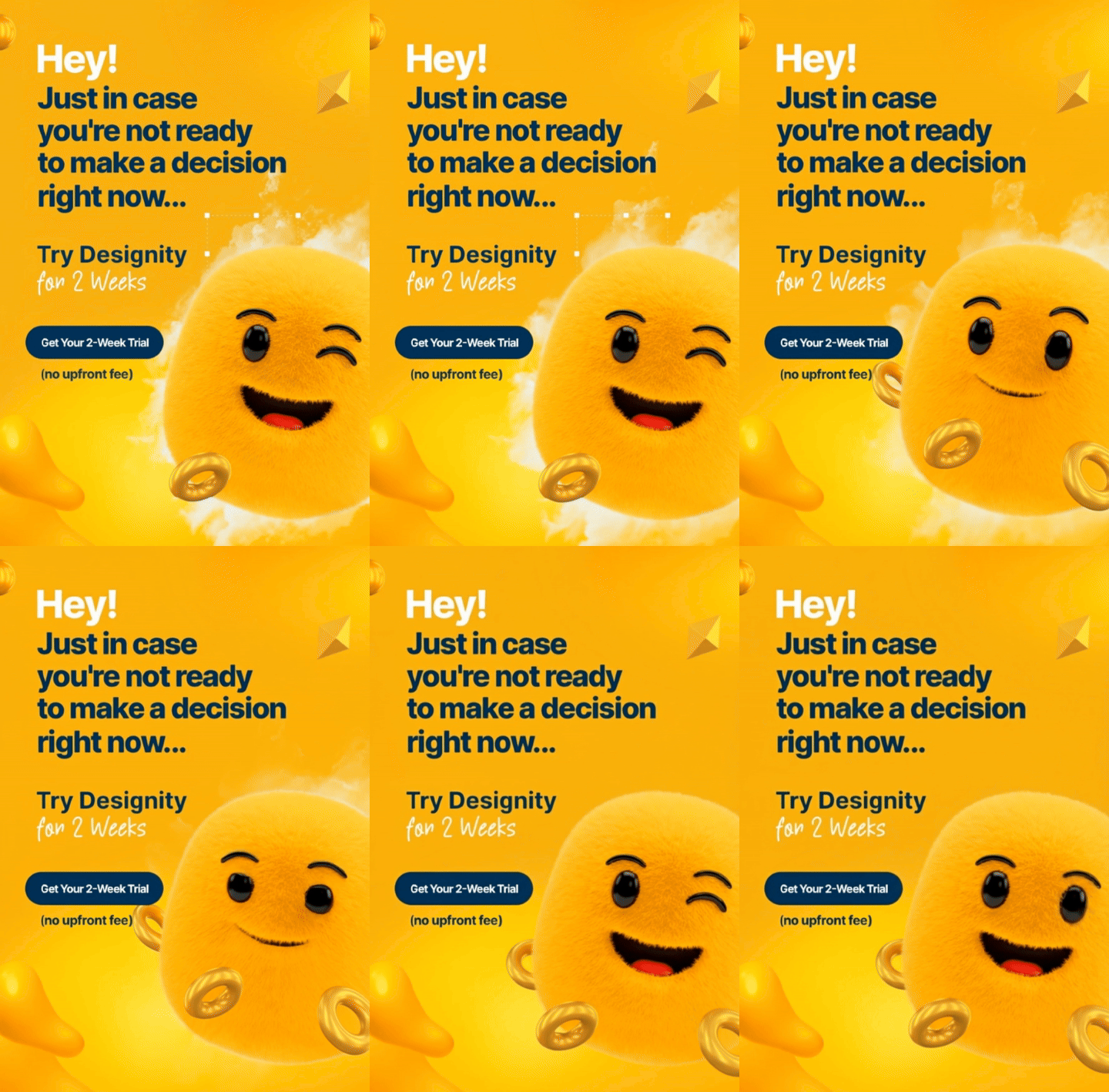
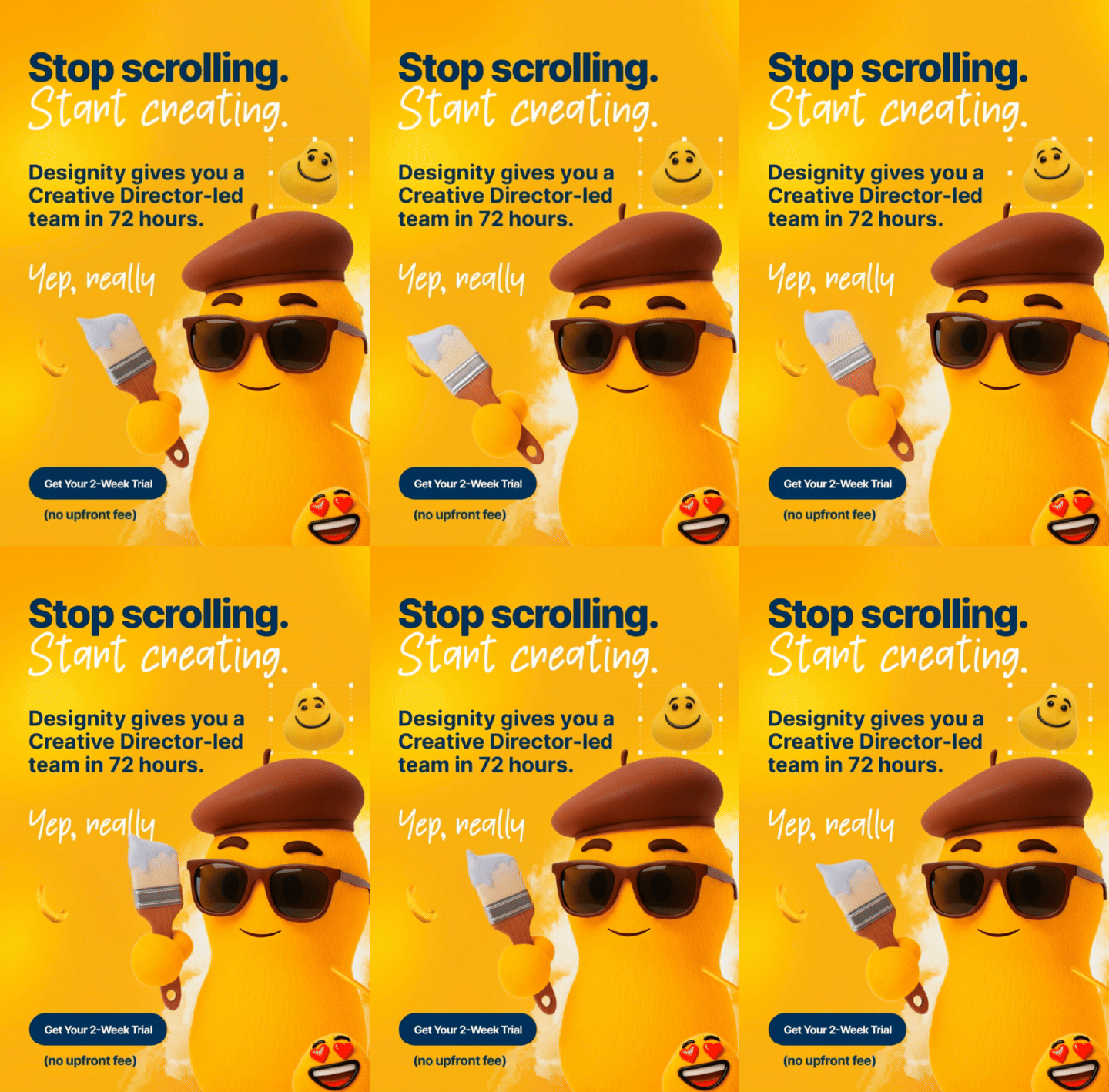






What makes an Instagram marketing strategy actually lead to better ads: targeting, creative, or timing?
In reality, it takes all three.
The strongest Instagram ads are built on a strategy that connects the right audience, the right message, and the right timing, then improves through testing.
Too many brands rely on one campaign idea to do all the heavy lifting. But lasting performance comes from a smarter, more consistent approach.
In this guide, we’ll show you what that looks like using insights from our work with Mimio Health, including the creative, messaging, and refresh strategy behind their Instagram ads.
9 Steps to Build an Instagram Marketing Strategy That Converts
Follow these nine steps to build an Instagram marketing strategy that drives stronger ads, smarter testing, and more consistent results:
1. Set a Clear Goal Before You Spend
Before you spend a dollar, define exactly what Instagram is meant to do for your brand.
Like any of your other social media platforms, Instagram should have a clear role in your marketing strategy. Sounds simple, but this is where a lot of campaigns lose focus fast.
“Better performance” is not a goal.
Do you want to build brand awareness, drive traffic, send people to your Instagram profile, generate messages, or increase purchases?
That distinction matters more than most brands realize, because each objective calls for a different strategy.
A conversion campaign needs stronger product value, sharper calls to action, and creative built to move someone toward a sale.
An awareness campaign, on the other hand, may need broader storytelling and more brand-led creative.
When your objective is clear from the start, it becomes much easier to align your audience, messaging, creative, and KPIs around results that actually matter.
2. Define Your Audience and Message
Before your social media creative can work, it has to reach the right Instagram users with the right message.
That’s where a lot of Instagram strategies fall short.
Teams build ads around what they want to say instead of what their audience actually needs to hear.
Start by getting clear on who you are targeting: their pain points, motivations, interests, and what is most likely to catch their attention in the scroll.
Then sharpen the message around that insight.
If you’re speaking to first-time buyers, for example, your ad may need education and trust signals.
And if you’re targeting ready-to-convert shoppers, lead with product benefits, urgency, and a stronger CTA.
3. Conduct a Competitive Analysis
Before building your next round of ads, study what competitors are already doing on Instagram.
The goal isn’t to copy your competitor, but to spot patterns, test your assumptions, and find gaps you can own.
Look at the formats they use most, the messages they repeat, and which posts seem to drive the strongest engagement. Also note what feels overdone. That’s often where the opportunity is.
For Mimio Health (a nutritechnology and biomimetic company), we reviewed brands across the health and wellness space with a bolder, more provocative visual tone.
Using the Meta Ads Library, sorted by highest impression volume, we looked at which creative styles, formats, and messages were getting the most visibility.
That exercise helped us define a stronger creative direction and identify ways for Mimio to stand out.
4. Build a Strong Visual Foundation
On Instagram, visual content does the heavy lifting. People scroll fast, make snap judgments, and respond to what feels clear and compelling in an instant.
A strong visual foundation starts with a few core essentials:
- Consistent brand elements: Colors, typography, and design choices that feel unmistakably connected to your brand
- Strong composition: Layouts that direct attention instead of scattering it
- Clear hierarchy: A message flow that helps the eye land on the headline, product, and key takeaway in the right order
- Intentional whitespace: Enough room for the creative to feel clean, focused, and easy to absorb
- A recognizable style: Visual consistency that makes each ad feel like part of a larger brand system
From there, the creative has to be eye-catching and earn attention quickly.
Storytelling, product focus, and immediate clarity all matter here.
When those pieces come together, the ad feels easier to process, easier to remember, and far more likely to hold attention long enough for the message to land.
5. Choose the Right Instagram Ad Formats
This is where a lot of teams make the process harder than it needs to be. Once Instagram gives you multiple placements and creative options, it’s tempting to test everything at once.
But that usually just creates more noise.
Here’s the better approach.
Start with the formats that best match your message, your creative and marketing resources, and the way your audience is most likely to engage:
- Feed ads: A smart starting point for most brands. Feed ads feel native to the platform and give you enough space to combine strong product visuals, a clear headline, and messaging that gets to the point. When the offer is easy to understand, feed ads can carry a lot of weight.
- Stories ads: Fast, full-screen, and immersive. Stories are a strong fit for short copy, quick value statements, and creative that feels immediate. One thing to keep in mind: the best Stories ads usually feel natural in the experience. Overdesigned creative can lose that advantage.
- Reels ads: This is where motion-first content comes into play. Instagram Reels can bring more energy, more personality, and a more trend-aware feel to the campaign. That said, they tend to work best when the content is built for the format, not squeezed into it later.
- Static ads: Reliable, efficient, and often underrated. Static ads are easier to produce and easier to test in volume, which makes them especially useful when you want to compare multiple headlines, layouts, or product angles without slowing down production.
- Motion ads: Great for capturing attention, but not every motion ad needs a heavy lift. Small animated details, simple transitions, or light movement can go a long way. The point is not complexity. The point is making the creative feel active enough to earn a second look.
Here’s where it gets interesting.
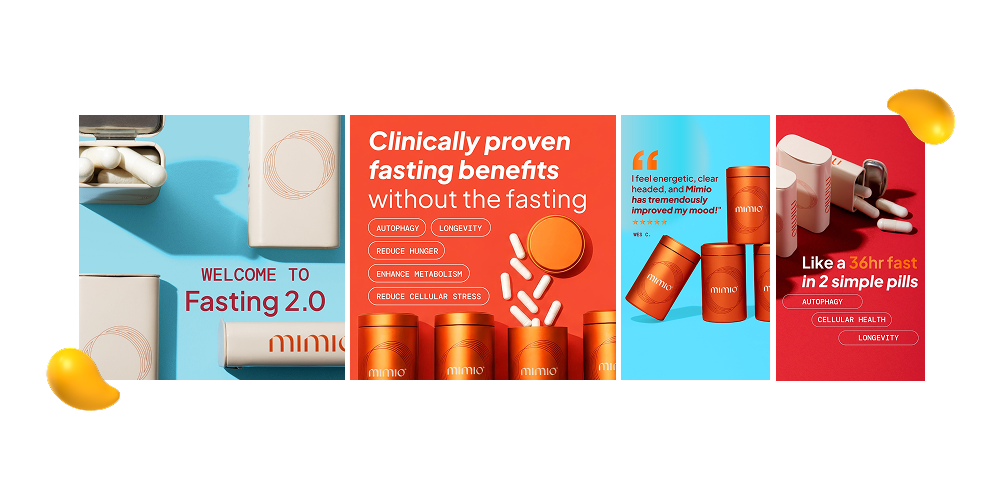
For Mimio Health, we started with a mix of static feed ads and Instagram Stories ads.
That gave us room to test different creative angles quickly while keeping production manageable.
As results started to come in, format choice became much more intentional. Certain messages worked better in feed. Others landed faster in Stories.
And once that pattern became clear, we had a stronger system for deciding what to make next.
That’s the real goal here. Not testing every format just because it’s available, but choosing the ones that give your creative the best chance to perform.
6. Increase Creative Volume
Creative fatigue shows up fast on Instagram. Audiences move quickly, see a high volume of content every day, and stop reacting once an ad starts to feel familiar.
Here’s why that matters:
- Instagram rewards freshness: New creative helps campaigns stay active and engaging.
- Even strong ads lose steam: A top performer today may slow down once people have seen it too many times.
- Small changes can have a real impact: A new headline, different crop, updated layout, or sharper benefit callout can shift performance more than expected.
- There is no single winning ad: Strong results usually come from testing multiple creative angles over time, not finding one perfect concept and sticking with it.
That’s the real takeaway.
Brands with more consistent performance usually are not relying on less creative. They are feeding the system more chances to learn.
{{drowning-in-projects-an}}
7. Test in Batches and Refresh Consistently
Here’s where things get more strategic.
Once you have more creative in play, batch testing helps you learn faster.
Instead of launching one ad at a time, run multiple variations side by side so you can compare hooks, visuals, messaging angles, and layouts in the same window.
What happens next is where the value shows up. Patterns become easier to spot.
You can see what is grabbing attention, which messages are landing, and which creative directions are worth building on.
More live variations also give Instagram more signals to work with, helping the platform identify stronger performers while giving your team clearer insight into what to test next.
8. Build a Consistent Refresh Rhythm
Now for the part most teams skip: consistency.
Refreshing creative only when performance drops puts the strategy in reaction mode. A steady rhythm keeps momentum going.
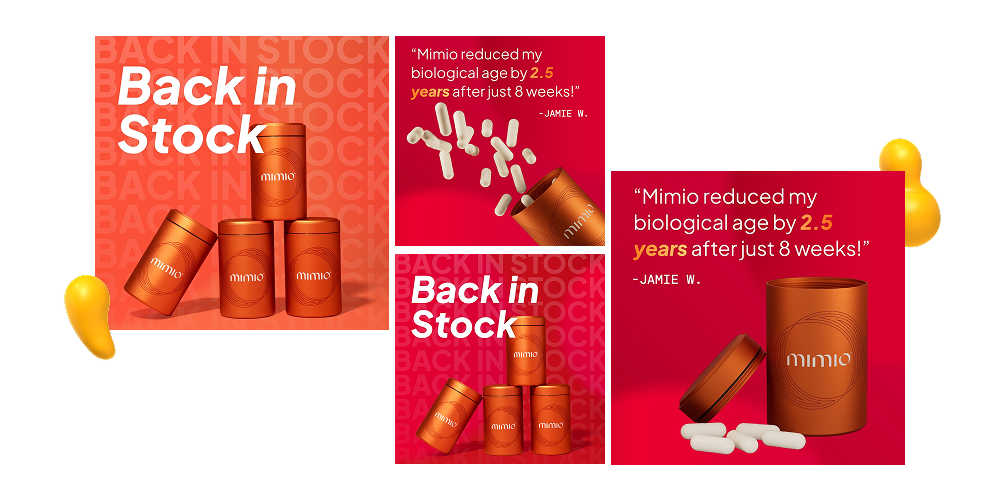
For Mimio Health, we refresh creative every two weeks, often launching 10 or more new ads across different visuals, messaging angles, layouts, and occasional A/B-style tweaks.
That cadence helps prevent fatigue, keeps the account active, and creates a regular flow of performance insights.
Here’s the key:
Volume stays manageable when the system is clear.
Effective brand guidelines, messaging pillars, and a structured workflow make it much easier to create content consistently without losing focus.

9. Refresh Creative Based on Performance Insights
Once a campaign is live, the next step is learning from what the results are telling you.
Strong refreshes come from paying attention to what is working, making smart adjustments, and carrying those insights into the next round of creative.
A. Start With What the Data Is Telling You
The best refreshes begin with a clear read on what is already performing well.
Look at the visuals, headlines, and messaging angles driving the strongest results, then look one level deeper for patterns.
A single winning ad is helpful, but repeated signals are what make the next batch stronger.
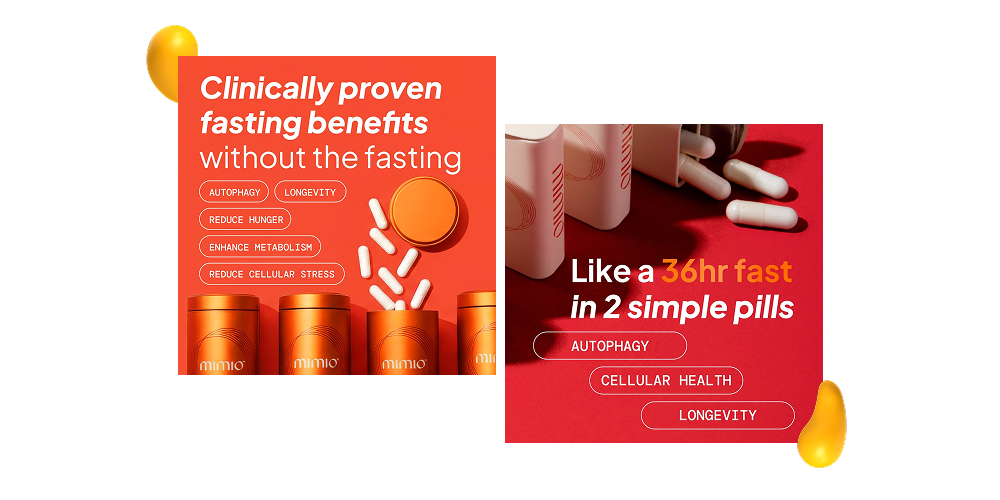
For Mimio Health, that meant noticing that interesting crops and product-benefit messaging were consistently performing well.
Once those patterns became clear, the next round had a much stronger direction.
B. Refresh the Hook, Not Just the Entire Concept
Here’s where the work gets sharper.
A refresh does not need to mean starting from scratch. Often, the strongest move is to keep the core idea and update the way it shows up.
That might mean:
- changing the headline or opening hook
- shifting the tone or target audience angle
- testing lifestyle imagery against product-focused visuals
- trying a new layout, background, crop, or text treatment
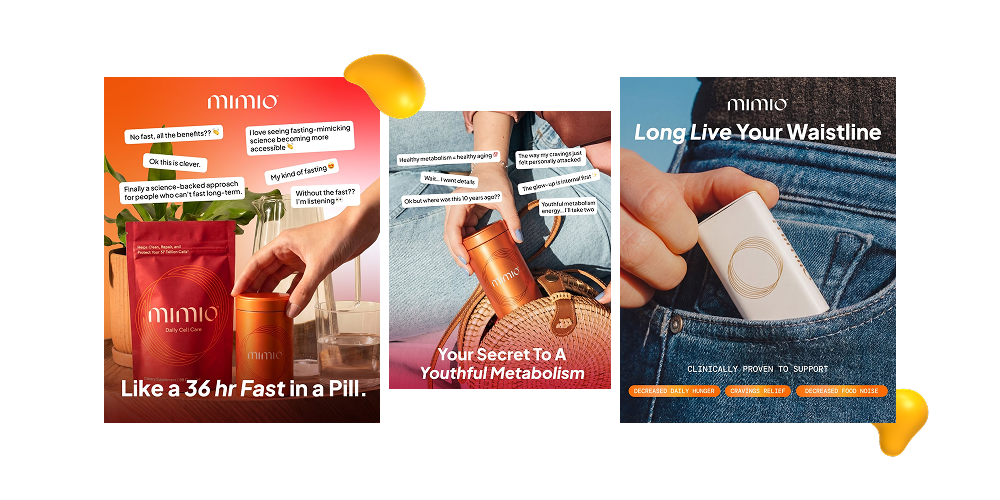
For example, Mimio’s “Midnight Munchies” concept performed well, which showed us the copy was landing and the appetite suppressant angle had traction.
From there, we tested related ideas instead of moving on too quickly. We also explored AI-generated lifestyle imagery to see how a different visual direction would perform.
C. Build on What’s Working
This is where consistency starts to compound.
Fresh creative still needs to feel connected to the brand and the patterns already proving effective. Strong brand guidelines make that easier by giving the team a clear foundation to build from.
For Mimio Health, each refresh cycle builds on the last.
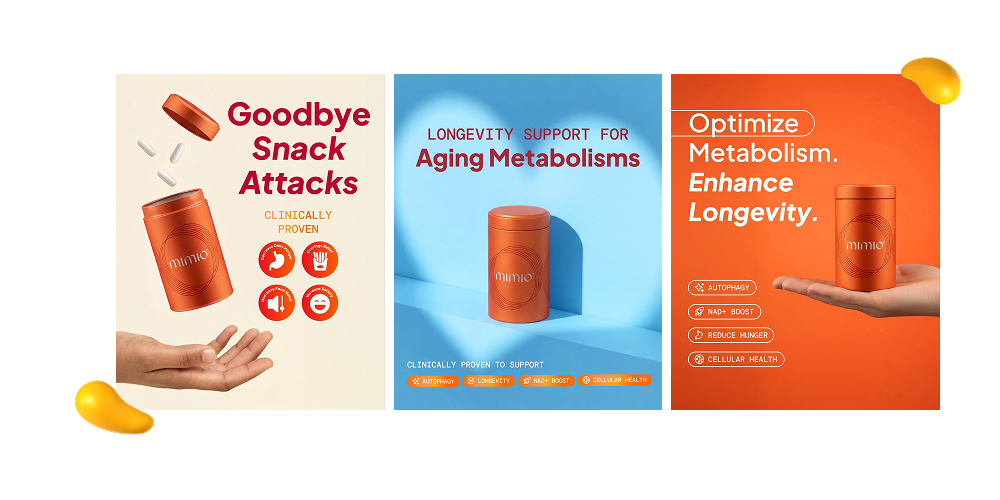
New ads explore different benefit-driven angles while staying visually cohesive. When benefit badges were working, we created more variations around that signal.
Over time, those small refinements added up and helped shape a stronger overall strategy.
Designity Is the Creative Behind the Clicks
Building an Instagram marketing strategy for better ads takes more than choosing a format and hoping one concept takes off.
Across planning, targeting, creative development, testing, and refreshes, strong Instagram ad performance comes from a system that keeps learning and improving over time.
That level of execution requires both strategic creative thinking and the ability to produce fresh, high-quality ad variations consistently.
Designity helps marketing teams do that with:
- A dedicated Creative Director who aligns strategy, messaging, and creative direction
- An on-demand team of top vetted creatives and marketers who can produce ad concepts, design variations, and refreshes at scale
- Flexible support across design, copy, motion, branding, and performance creative
- A streamlined platform for managing requests, feedback, approvals, and timelines
- Predictable monthly pricing that makes scaling creative output easier to plan
For teams looking to build better Instagram ads, that means more consistency, faster testing, smarter refreshes, and a stronger creative system behind every campaign.
Book a demo to see how Designity can help your team turn an Instagram marketing strategy into ads that perform.