





Blog > Marketing > Branding > Food Brand Marketing: Scaling Creative Without Identity Loss

Food Brand Marketing: Scaling Creative Without Identity Loss

April 6, 2026
Scaling food brand marketing creative with chef character cooking social media content and campaign elements by Designity
Table of Contents

Growth is exciting, right up until your food brand starts acting like it has multiple personalities and not enough flava. 

What used to feel clear and unmistakable suddenly gets pulled in ten different directions. 

New SKUs hit the pipeline. 

Campaigns stack up. 

Channels multiply. 

More people start touching the work. 

And before long, the brand that once felt tight starts feeling a little patched together.

That’s where a lot of food brands get into trouble. 

In food brand marketing, growth brings visibility, momentum, and opportunity, but it also puts real pressure on the creative.

The challenge is keeping the brand recognizable as the business gets bigger, busier, and more complex.

Below, we’re getting into how smart food brands scale creative in a way that still feels cohesive, confident, and unmistakably their own.

10 Ways to Scale Food Brand Marketing Creative without Becoming Bland

Here’s how food industry brands maintain clarity, consistency, and cultural relevance as they grow:

1. Symbolize Taste Beyond the Product

Food brands love talking about flavor, but the strongest brands do more than describe what something tastes like. 

They build a full sensory identity around it. 

That means thinking beyond the product itself and asking what your brand tastes like visually, verbally, and emotionally. 

Is it playful, indulgent, bold, nostalgic, refined? 

That “taste” should show up in your colors, photography, tone of voice, pacing, and creative choices. 

When that identity is clear, every campaign feels connected instead of random. 

Without it, growth can make a brand feel scattered fast. 


Oatly is a great example of this. Its irreverent, self-aware personality shows up everywhere, making the brand instantly recognizable across formats and channels.
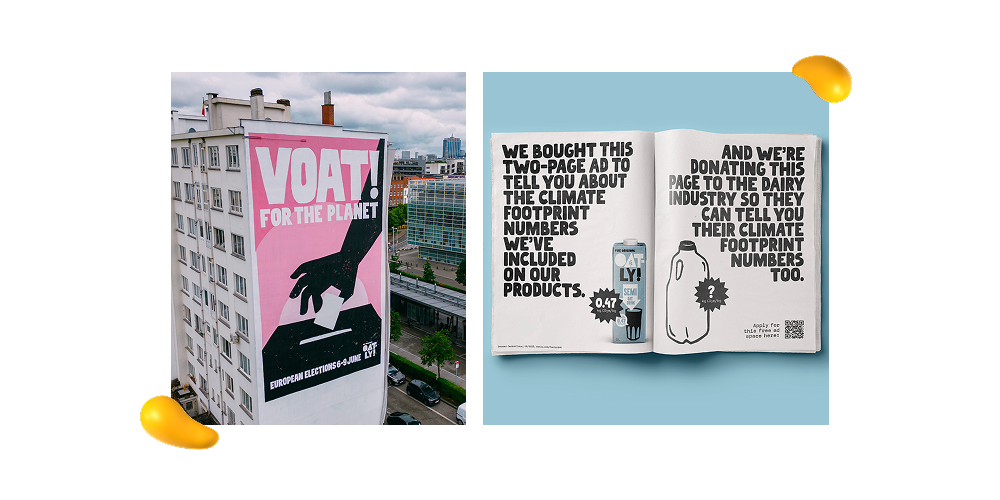
Designity food brand marketing example featuring Oatly’s bold advertising, strong brand voice, and sustainability-focused campaign creative

2. Build a Creative System, Not Just Campaigns

Creative starts to drift when every launch is treated like its own mini rebrand.

You know:

A new flavor gets a new look. 

A seasonal campaign takes on a completely different tone. 

A product drop introduces visuals that don’t quite connect back to anything else. 

Over time, the brand starts feeling inconsistent across packaging, ads, email, and social.

That’s why strong food brands build food brand design systems and not only campaigns.

A solid creative system includes packaging templates, typography rules, layout principles, motion guidelines, photo style, and a clear messaging hierarchy so teams know what should stay consistent and what has room to flex.

That structure makes it much easier to launch quickly without starting from scratch every time.

Take Coca-Cola as an example. Its campaigns are constantly evolving, but its signature red, typography, iconography, and emotional tone remain consistent. This keeps the brand instantly recognizable across every touchpoint.

Designity food brand marketing example showcasing Coca-Cola’s consistent visual identity, lifestyle campaigns, and recognizable brand assets

3. Anchor Everything in a Single Narrative

As food brands grow, their messaging can easily start to drift. 

One campaign may highlight clean ingredients, while another focuses on sustainability, convenience, taste, or lifestyle appeal. 

Each angle may be valuable, but without a clear unifying narrative, the brand can start to feel scattered.

The strongest brands stay rooted in one central idea that connects everything they do. 

That core narrative acts as a filter for campaigns, packaging, product launches, and digital content, helping teams decide what aligns with the brand and what doesn't. 

Sweetgreen is a strong example. Its messaging consistently centers on freshness, transparency, and a closer connection to real food, which helps the brand stay focused and recognizable as it grows.

Designity food brand marketing example showing Sweetgreen’s fresh, lifestyle-driven campaigns and ingredient-focused brand storytelling

4. Design for Range, Not Reinvention

A food brand should be able to evolve without looking like it is constantly introducing a new identity.

New flavors, limited editions, collaborations, and seasonal campaigns should bring variety, but they still need to feel like they belong to the same brand world.

That’s where range becomes really important.

A strong creative system gives teams room to explore different moods, color combinations, packaging variations, and campaign concepts without losing recognizability.

The details can shift, but the core visual language should still hold.

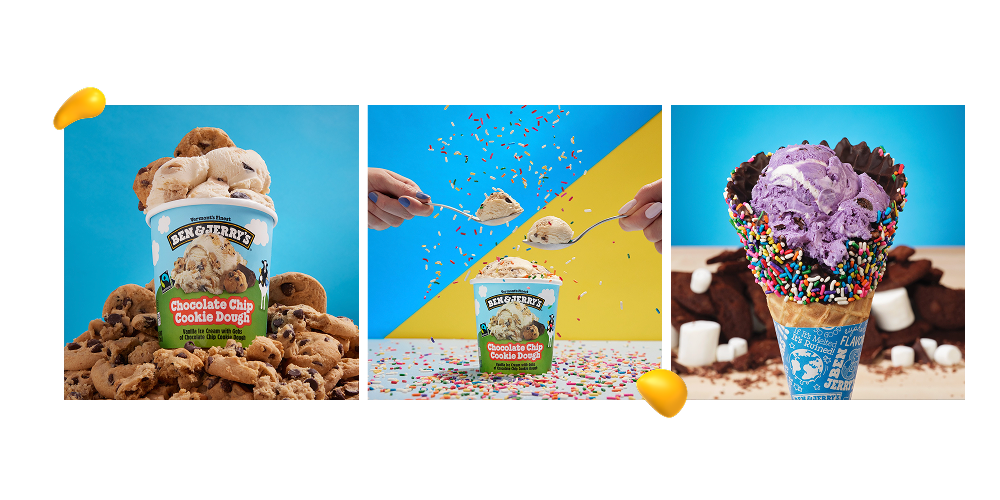
Ben & Jerry’s shows how this works in practice. There’s always something new happening, but the playful illustration style and quirky personality keep the brand instantly familiar no matter the flavor or partnership.
5. Treat Channels as Expressions, Not Exceptions

Channel drift is one of the easiest ways a food brand starts to feel disconnected. 

The website may sound polished and elevated, while social gets overly casual, email leans salesy, and paid ads strip out any real personality.

Nothing is technically wrong, but together it starts to feel like several different brands are speaking at once.

Brands that scale well avoid that by creating consistency across formats, not sameness. The tone can adjust depending on the channel, but the brand should still sound like itself everywhere it shows up. 

That means deciding what traits are fixed, what can flex, and how the voice translates across social, email, packaging, and paid media.

Across packaging, Instagram, and out-of-home, Liquid Death keeps the same loud, irreverent energy intact.

Designity food brand marketing example featuring Liquid Death’s edgy branding, disruptive packaging, and bold campaign creative

6. Protect the Core, Let the Edges Experiment

Not every part of a food brand should be open to change. 

Some elements need to stay steady so the brand remains recognizable, while others can flex to keep things fresh.

The key is knowing the difference. 

Core elements like your logo, foundational tone, primary colors, and central narrative should stay consistent. Those are the pieces that create familiarity. 

Around that core, there’s room to experiment with campaign visuals, limited editions, seasonal moments, and collaborations.

That balance gives teams more creative freedom without making the brand feel unstable. 

Starbucks does this perfectly. The logo, green palette, and overall tone stay consistent, while seasonal cups and localized executions give the brand plenty of room to evolve.

Designity food brand marketing example highlighting Starbucks seasonal drink campaigns, product styling, and lifestyle content

7. Build Internal Alignment Before You Scale Output

Defining the brand is one thing. Getting the whole team to actually carry it through is where the real work starts.

Brand consistency at scale takes alignment across every function, not just marketing. 

Front of house, back of house, ops, tech, and creative all shape how the brand shows up. 

A general manager, social media intern, uniform supplier, or architect should all be able to understand the brand clearly enough to apply it in their own lane.

But that kind of brand consistency doesn’t happen on its own. It comes from shared tools, clear guidance, and a team that knows what they are helping build.

8. Turn Your Brand Guide Into an Operating System

A brand guide that just sits in a PDF isn’t doing much of anything for you. 

As you scale, your brand needs to function more like an operating system than a style reference.

That means going beyond visuals. Teams, partners, vendors, and collaborators should all know how to apply the brand in real situations. 

What tone to use in a campaign. How to make trade-offs. What decisions need approval. What “on-brand” actually looks like in practice.

The more usable your guidelines are, the less guesswork teams have to do. And the more consistent your brand becomes across everything.

9. Scale in Phases, Not All at Once

For food brands, growth usually doesn’t fall apart all at once. It shows up in the details first. 

Packaging starts looking inconsistent. Social, paid, and retail messaging stop feeling connected. New launches move faster than the team can support.

That’s why scaling in phases makes more sense.

Instead of expanding everything at once, grow one product line, market, or channel at a time. Test what works, tighten the system, then scale.

For example, lock in packaging rules before extending the line, and clarify messaging before entering a new market. Phased growth protects quality, consistency, and brand identity.

10. Use a Strategic Creative Director-Led Partner to Scale Consistently

As food brands grow, creative gets harder to manage consistently across packaging, campaigns, content, and channels:

  • In-house teams often get stretched across launches, sales support, and daily production, so brand oversight slips.
  • Freelancers can execute well, but they usually work project by project, not as one connected brand system.
  • Traditional agencies may support campaigns, but they’re often built around deliverables, retainers, and slower handoffs.

A Creative Director-led partner solves that with one creative vision, one standard across touchpoints, and flexible team support. 

Designity does this through its Creative-as-a-Service (CaaS) model. 

Brands get a dedicated Creative Project Manager, Creative Director, and digital marketing expert, plus access to 100+ creative and marketing services under one monthly plan.

Instead of juggling freelancers or disconnected agency teams, brands get one connected system. 

That means strategic leadership, streamlined communication, and flexible creative support that keeps deliverables aligned across channels.

{{two-week-trial}}

6 Key Benefits of Scaling Food Brand Marketing Creative

As food brands grow, creative starts carrying a lot more than the campaign. 

It has to support new SKUs, retail rollouts, seasonal launches, paid media, social, shopper marketing, and all the little in-between assets nobody plans for until they are suddenly urgent. 

Scaling food brand marketing creative is what helps that growth feel coordinated instead of chaotic:

  1. It helps your team keep up with demand without watering down the brand: When new flavors, promos, retailer asks, and campaign requests start piling up, creative volume spikes fast. Scalable creative helps the brand produce more without every new asset looking like it came from a different company.

  1. It makes launches faster, smoother, and a lot less painful: New product drop next month. Retail deck due Friday. Paid ads needed yesterday. When creative systems are already in place, launches move faster because the team is building from a strong foundation, not reinventing packaging, messaging, and campaign structure every single time.

  1. It keeps the brand recognizable as it spreads across more places: The second a food brand moves beyond one hero product and one channel, consistency gets tested. Scaled creative helps the brand still look and sound like itself whether it’s showing up on shelf, in email, in paid social, on Amazon, or in a retailer presentation.

  1. It cuts down on wasted time, wasted budget, and creative rework: Without a scalable system, teams spend half their time fixing inconsistency, chasing approvals, and patching together assets that should have been aligned from the start. Strong creative infrastructure means fewer do-overs and a much better return on the work you are already paying for.

  1. It gives growth more commercial impact: Scaling creative isn’t just about making more stuff. It is about making sure every campaign, launch, and channel push works harder for the business. Better alignment across assets can mean stronger sell-through, clearer product positioning, and a brand that performs more confidently in the market.

  1. It makes the brand look ready for a bigger stage: When a brand can scale creative cleanly, it signals maturity. That’s crucial when you are trying to win bigger retail opportunities, enter new markets, impress partners, or show investors that growth is not going to turn the brand into a mess.

Why Brand Identity Gets Lost as Food Brands Scale

Scaling a food brand isn’t the problem. Scaling without clear guardrails is. 

As brands grow, the pressure to appeal to more potential customers, move faster, and produce more can start pulling the creative away from the very things that made the brand distinctive in the first place.

Here are the biggest ways that happens:

  • Pressure to conform: As brands grow, they often start chasing category norms instead of protecting what made them memorable.
  • Broader audiences: Trying to appeal to everyone can water down the voice, personality, and values that originally built loyalty.
  • Operational expansion: More products, more partners, and more moving parts can make it harder to keep creative aligned with the brand.
  • Scaling too fast: Rapid growth without structure usually leads to rushed decisions, weaker quality control, and more brand drift.

Hungry for Growth? Designity Makes Sure You Do It Consistently 

As food brands grow, keeping the brand consistent across campaigns, launches, and channels becomes harder. 

The food industry brands that scale well are the ones that build creative systems that support growth without weakening what makes them recognizable.

Designity supports food marketing teams with:

  • A dedicated Creative Director aligned to your brand and goals
  • A dedicated Creative Project Manager to keep projects moving smoothly
  • Access to digital marketing experts across channels and campaign types
  • An on-demand team of specialized creatives matched to your needs
  • Support across design, marketing, strategy, and creative production
  • A centralized platform for requests, feedback, approvals, and timelines
  • Flexible monthly support with predictable pricing

The result is faster execution, stronger brand consistency, and creative growth that feels intentional instead of fragmented.

Book a demo to see how Designity can help your food brand scale creatively without losing its identity.


Share this post:

Sara, a Designity content writer.
About the Author:
Matthew Norman Wohlabaugh
Matthew is a branding specialist with 15 years of experience focusing predominantly in the beauty and wellness space. With a background in both strategy and creative, he helps brands with positioning, storytelling, and crafting visual identities that connect, convert, and endure.
Have a collab or partnership in mind? Reach out at marketing@designity.com

Recent Marketing Content from Designity

Continue Exploring the Latest Articles

About Designity

Designity is a Creative-as-a-Service partner for marketing and creative leaders who need high-quality creative without the overhead of agencies or in-house teams. With top 3% creatives, Creative Director-led support, and flexible monthly plans, it’s a more cost-efficient way to scale.
Book a Demo Call
Get Insights From Designity
Table of Contents

More in Marketing

Mobile App Design

No items found.

Marketing Advice

No items found.

Customer Marketing

No items found.

Demand Generation

No items found.

Corporate Marketing

No items found.

Creative Agency

No items found.

Augmented Reality

No items found.

ecommerce Design

No items found.

Social Media Marketing

No items found.

Industry Design

No items found.

Content Marketing

No items found.

Video Marketing

No items found.

Industry Marketing

No items found.

Design Services

No items found.

Jacob Cass

No items found.

eCommerce

No items found.

Financial Services

No items found.

Video Production

No items found.

Package Design

No items found.

OpenAI

No items found.

Web3

No items found.

Logo Design

No items found.

ChatGPT

No items found.

Digital Marketing

No items found.

Artificial Intelligence

No items found.

Creative Directors

No items found.

Trade Show

No items found.

Designity

No items found.

Recession

No items found.

Law Firm

No items found.

Freelance

No items found.

Motion Graphics

No items found.

Comparison

No items found.

In-House Teams

No items found.

Website Design

No items found.

Branding

No items found.

99Designs

No items found.

Staffing Agency

No items found.

Cryptocurrency

No items found.

Healthcare Design

No items found.

SaaS Design

No items found.

Blockchain

No items found.

Business Collateral Design

No items found.

Creative Teams

No items found.

Freelance Marketplace

No items found.

Creative Advice

No items found.

NFTs

No items found.

Graphic Design

No items found.

Copywriting

No items found.

Virtual Reality

No items found.

Team Building

No items found.

Marketing

About Designity

Designity is a Creative-as-a-Service partner for marketing and creative leaders who need high-quality creative without the overhead of agencies or in-house teams. With top 3% creatives, Creative Director-led support, and flexible monthly plans, it’s a more cost-efficient way to scale.
Book a Demo Call
Get Insights From Designity
Your Designity creative team, against a yellow blog background.
About Designity
Designity is a virtual, on-demand creative and marketing agency that has been delivering flexible, scalable Creative-as-a-Service (CaaS) solutions since 2015. Each plan gives you instant access to an expert team made up of the top 3% fully vetted creatives, all led by a designated Creative Director, and supported by expert Project Managers and Marketing Strategists.

With 100+ services plus a brand-trained AI assistant to boost workflow efficiency, Designity gives you faster, more affordable results than traditional agencies or in-house teams. It’s everything you need to streamline your creative process and hit your marketing goals — on time, on budget, and always on brand.
cta-h-an
cta-g-an
cta-f-an
cta-e
cta-d
cta-c
cta-b
cta-a
Blog > Marketing > Branding > Food Brand Marketing: Scaling Creative Without Identity Loss

Food Brand Marketing: Scaling Creative Without Identity Loss

April 6, 2026
Scaling food brand marketing creative with chef character cooking social media content and campaign elements by Designity

Growth is exciting, right up until your food brand starts acting like it has multiple personalities and not enough flava. 

What used to feel clear and unmistakable suddenly gets pulled in ten different directions. 

New SKUs hit the pipeline. 

Campaigns stack up. 

Channels multiply. 

More people start touching the work. 

And before long, the brand that once felt tight starts feeling a little patched together.

That’s where a lot of food brands get into trouble. 

In food brand marketing, growth brings visibility, momentum, and opportunity, but it also puts real pressure on the creative.

The challenge is keeping the brand recognizable as the business gets bigger, busier, and more complex.

Below, we’re getting into how smart food brands scale creative in a way that still feels cohesive, confident, and unmistakably their own.

10 Ways to Scale Food Brand Marketing Creative without Becoming Bland

Here’s how food industry brands maintain clarity, consistency, and cultural relevance as they grow:

1. Symbolize Taste Beyond the Product

Food brands love talking about flavor, but the strongest brands do more than describe what something tastes like. 

They build a full sensory identity around it. 

That means thinking beyond the product itself and asking what your brand tastes like visually, verbally, and emotionally. 

Is it playful, indulgent, bold, nostalgic, refined? 

That “taste” should show up in your colors, photography, tone of voice, pacing, and creative choices. 

When that identity is clear, every campaign feels connected instead of random. 

Without it, growth can make a brand feel scattered fast. 


Oatly is a great example of this. Its irreverent, self-aware personality shows up everywhere, making the brand instantly recognizable across formats and channels.

Designity food brand marketing example featuring Oatly’s bold advertising, strong brand voice, and sustainability-focused campaign creative

2. Build a Creative System, Not Just Campaigns

Creative starts to drift when every launch is treated like its own mini rebrand.

You know:

A new flavor gets a new look. 

A seasonal campaign takes on a completely different tone. 

A product drop introduces visuals that don’t quite connect back to anything else. 

Over time, the brand starts feeling inconsistent across packaging, ads, email, and social.

That’s why strong food brands build food brand design systems and not only campaigns.

A solid creative system includes packaging templates, typography rules, layout principles, motion guidelines, photo style, and a clear messaging hierarchy so teams know what should stay consistent and what has room to flex.

That structure makes it much easier to launch quickly without starting from scratch every time.

Take Coca-Cola as an example. Its campaigns are constantly evolving, but its signature red, typography, iconography, and emotional tone remain consistent. This keeps the brand instantly recognizable across every touchpoint.

Designity food brand marketing example showcasing Coca-Cola’s consistent visual identity, lifestyle campaigns, and recognizable brand assets

3. Anchor Everything in a Single Narrative

As food brands grow, their messaging can easily start to drift. 

One campaign may highlight clean ingredients, while another focuses on sustainability, convenience, taste, or lifestyle appeal. 

Each angle may be valuable, but without a clear unifying narrative, the brand can start to feel scattered.

The strongest brands stay rooted in one central idea that connects everything they do. 

That core narrative acts as a filter for campaigns, packaging, product launches, and digital content, helping teams decide what aligns with the brand and what doesn't. 

Sweetgreen is a strong example. Its messaging consistently centers on freshness, transparency, and a closer connection to real food, which helps the brand stay focused and recognizable as it grows.

Designity food brand marketing example showing Sweetgreen’s fresh, lifestyle-driven campaigns and ingredient-focused brand storytelling

4. Design for Range, Not Reinvention

A food brand should be able to evolve without looking like it is constantly introducing a new identity.

New flavors, limited editions, collaborations, and seasonal campaigns should bring variety, but they still need to feel like they belong to the same brand world.

That’s where range becomes really important.

A strong creative system gives teams room to explore different moods, color combinations, packaging variations, and campaign concepts without losing recognizability.

The details can shift, but the core visual language should still hold.

Ben & Jerry’s shows how this works in practice. There’s always something new happening, but the playful illustration style and quirky personality keep the brand instantly familiar no matter the flavor or partnership.

5. Treat Channels as Expressions, Not Exceptions

Channel drift is one of the easiest ways a food brand starts to feel disconnected. 

The website may sound polished and elevated, while social gets overly casual, email leans salesy, and paid ads strip out any real personality.

Nothing is technically wrong, but together it starts to feel like several different brands are speaking at once.

Brands that scale well avoid that by creating consistency across formats, not sameness. The tone can adjust depending on the channel, but the brand should still sound like itself everywhere it shows up. 

That means deciding what traits are fixed, what can flex, and how the voice translates across social, email, packaging, and paid media.

Across packaging, Instagram, and out-of-home, Liquid Death keeps the same loud, irreverent energy intact.

Designity food brand marketing example featuring Liquid Death’s edgy branding, disruptive packaging, and bold campaign creative

6. Protect the Core, Let the Edges Experiment

Not every part of a food brand should be open to change. 

Some elements need to stay steady so the brand remains recognizable, while others can flex to keep things fresh.

The key is knowing the difference. 

Core elements like your logo, foundational tone, primary colors, and central narrative should stay consistent. Those are the pieces that create familiarity. 

Around that core, there’s room to experiment with campaign visuals, limited editions, seasonal moments, and collaborations.

That balance gives teams more creative freedom without making the brand feel unstable. 

Starbucks does this perfectly. The logo, green palette, and overall tone stay consistent, while seasonal cups and localized executions give the brand plenty of room to evolve.

Designity food brand marketing example highlighting Starbucks seasonal drink campaigns, product styling, and lifestyle content

7. Build Internal Alignment Before You Scale Output

Defining the brand is one thing. Getting the whole team to actually carry it through is where the real work starts.

Brand consistency at scale takes alignment across every function, not just marketing. 

Front of house, back of house, ops, tech, and creative all shape how the brand shows up. 

A general manager, social media intern, uniform supplier, or architect should all be able to understand the brand clearly enough to apply it in their own lane.

But that kind of brand consistency doesn’t happen on its own. It comes from shared tools, clear guidance, and a team that knows what they are helping build.

8. Turn Your Brand Guide Into an Operating System

A brand guide that just sits in a PDF isn’t doing much of anything for you. 

As you scale, your brand needs to function more like an operating system than a style reference.

That means going beyond visuals. Teams, partners, vendors, and collaborators should all know how to apply the brand in real situations. 

What tone to use in a campaign. How to make trade-offs. What decisions need approval. What “on-brand” actually looks like in practice.

The more usable your guidelines are, the less guesswork teams have to do. And the more consistent your brand becomes across everything.

9. Scale in Phases, Not All at Once

For food brands, growth usually doesn’t fall apart all at once. It shows up in the details first. 

Packaging starts looking inconsistent. Social, paid, and retail messaging stop feeling connected. New launches move faster than the team can support.

That’s why scaling in phases makes more sense.

Instead of expanding everything at once, grow one product line, market, or channel at a time. Test what works, tighten the system, then scale.

For example, lock in packaging rules before extending the line, and clarify messaging before entering a new market. Phased growth protects quality, consistency, and brand identity.

10. Use a Strategic Creative Director-Led Partner to Scale Consistently

As food brands grow, creative gets harder to manage consistently across packaging, campaigns, content, and channels:

  • In-house teams often get stretched across launches, sales support, and daily production, so brand oversight slips.
  • Freelancers can execute well, but they usually work project by project, not as one connected brand system.
  • Traditional agencies may support campaigns, but they’re often built around deliverables, retainers, and slower handoffs.

A Creative Director-led partner solves that with one creative vision, one standard across touchpoints, and flexible team support. 

Designity does this through its Creative-as-a-Service (CaaS) model. 

Brands get a dedicated Creative Project Manager, Creative Director, and digital marketing expert, plus access to 100+ creative and marketing services under one monthly plan.

Instead of juggling freelancers or disconnected agency teams, brands get one connected system. 

That means strategic leadership, streamlined communication, and flexible creative support that keeps deliverables aligned across channels.

{{two-week-trial}}

6 Key Benefits of Scaling Food Brand Marketing Creative

As food brands grow, creative starts carrying a lot more than the campaign. 

It has to support new SKUs, retail rollouts, seasonal launches, paid media, social, shopper marketing, and all the little in-between assets nobody plans for until they are suddenly urgent. 

Scaling food brand marketing creative is what helps that growth feel coordinated instead of chaotic:

  1. It helps your team keep up with demand without watering down the brand: When new flavors, promos, retailer asks, and campaign requests start piling up, creative volume spikes fast. Scalable creative helps the brand produce more without every new asset looking like it came from a different company.

  1. It makes launches faster, smoother, and a lot less painful: New product drop next month. Retail deck due Friday. Paid ads needed yesterday. When creative systems are already in place, launches move faster because the team is building from a strong foundation, not reinventing packaging, messaging, and campaign structure every single time.

  1. It keeps the brand recognizable as it spreads across more places: The second a food brand moves beyond one hero product and one channel, consistency gets tested. Scaled creative helps the brand still look and sound like itself whether it’s showing up on shelf, in email, in paid social, on Amazon, or in a retailer presentation.

  1. It cuts down on wasted time, wasted budget, and creative rework: Without a scalable system, teams spend half their time fixing inconsistency, chasing approvals, and patching together assets that should have been aligned from the start. Strong creative infrastructure means fewer do-overs and a much better return on the work you are already paying for.

  1. It gives growth more commercial impact: Scaling creative isn’t just about making more stuff. It is about making sure every campaign, launch, and channel push works harder for the business. Better alignment across assets can mean stronger sell-through, clearer product positioning, and a brand that performs more confidently in the market.

  1. It makes the brand look ready for a bigger stage: When a brand can scale creative cleanly, it signals maturity. That’s crucial when you are trying to win bigger retail opportunities, enter new markets, impress partners, or show investors that growth is not going to turn the brand into a mess.

Why Brand Identity Gets Lost as Food Brands Scale

Scaling a food brand isn’t the problem. Scaling without clear guardrails is. 

As brands grow, the pressure to appeal to more potential customers, move faster, and produce more can start pulling the creative away from the very things that made the brand distinctive in the first place.

Here are the biggest ways that happens:

  • Pressure to conform: As brands grow, they often start chasing category norms instead of protecting what made them memorable.
  • Broader audiences: Trying to appeal to everyone can water down the voice, personality, and values that originally built loyalty.
  • Operational expansion: More products, more partners, and more moving parts can make it harder to keep creative aligned with the brand.
  • Scaling too fast: Rapid growth without structure usually leads to rushed decisions, weaker quality control, and more brand drift.

Hungry for Growth? Designity Makes Sure You Do It Consistently 

As food brands grow, keeping the brand consistent across campaigns, launches, and channels becomes harder. 

The food industry brands that scale well are the ones that build creative systems that support growth without weakening what makes them recognizable.

Designity supports food marketing teams with:

  • A dedicated Creative Director aligned to your brand and goals
  • A dedicated Creative Project Manager to keep projects moving smoothly
  • Access to digital marketing experts across channels and campaign types
  • An on-demand team of specialized creatives matched to your needs
  • Support across design, marketing, strategy, and creative production
  • A centralized platform for requests, feedback, approvals, and timelines
  • Flexible monthly support with predictable pricing

The result is faster execution, stronger brand consistency, and creative growth that feels intentional instead of fragmented.

Book a demo to see how Designity can help your food brand scale creatively without losing its identity.
Share this post:

Sara, a Designity content writer.
About the Author:
Matthew Norman Wohlabaugh
Matthew is a branding specialist with 15 years of experience focusing predominantly in the beauty and wellness space. With a background in both strategy and creative, he helps brands with positioning, storytelling, and crafting visual identities that connect, convert, and endure.
Have a collab or partnership in mind? Reach out at marketing@designity.com

Share this post:

Back to top
Close icon