




Most brands think brand positioning is a messaging exercise.
Write a paragraph, add a tagline, call it strategy. Ta-da!
We wish… but unfortunately, that’s not enough.
Brand positioning is the strategic choice that shapes how people see your brand, what they associate it with, and why they’d pick you over someone else.
If your positioning could be copied, pasted, and swapped with a competitor’s name without anyone noticing, you don’t have positioning.
You have generic marketing.
In this post, we’re breaking down 10 brand positioning examples that truly own a space in the mind, from The Ordinary and Liquid Death to Dollar Shave Club.
What Is Brand Positioning?
Brand positioning is the process of shaping how people perceive your brand and what they associate it with.
It defines the unique value you offer and gives your target customers a clear reason to choose you over competitors.
For example, two sunglasses brands may both sell protective eyewear with prescription lenses.
Riveting, right?
But if one uses titanium frames, that brand can position itself around being lighter, more flexible, and more durable.
So now we’re not just talking about selling sunglasses; we’re selling a specific advantage: safety and durability.
That’s what successful brand positioning does.
It turns a product or service from “basically the same” into something people can actually remember and choose.
What Are the Different Types of Brand Positioning?
There’s no single way to position a brand.
Most companies anchor their brand positioning strategy around one core angle. Here are the most common ones:
- Value-based positioning: Focuses on cost-effectiveness or getting more for your money. These brands win by making customers feel smart for choosing them. Think: good quality, lower price, no unnecessary extras.
- Quality-based positioning: Centers on superior craftsmanship, performance, or reliability. The message is simple: this costs more because it’s better, and that difference shows up in the product or service.
- Benefit-based positioning: Highlights a specific outcome the customer cares about. Not features. The actual payoff. What gets easier, faster, safer, or better because of your product?
- Problem–solution positioning: Starts with a clear pain point and positions the brand as the fix. When this works, the customer feels understood before they even buy.
- Competitor-based positioning: Draws a clear contrast with alternatives. Better service, simpler product, lower cost, fewer headaches. The goal is to make the comparison obvious.
Pro tip: Most strong brands avoid doing these all at once. They pick one, commit to it, and build everything around it.
Now, let’s dive deeper into 10 powerful brand positioning strategy examples.
10 Brand Positioning Examples Every Marketer Should Study
Below are 10 brands that nailed positioning and made it hard to confuse them with anyone else:
1. Avis: Turned “Second Place” into a Promise
“We’re No. 2. We try harder.”
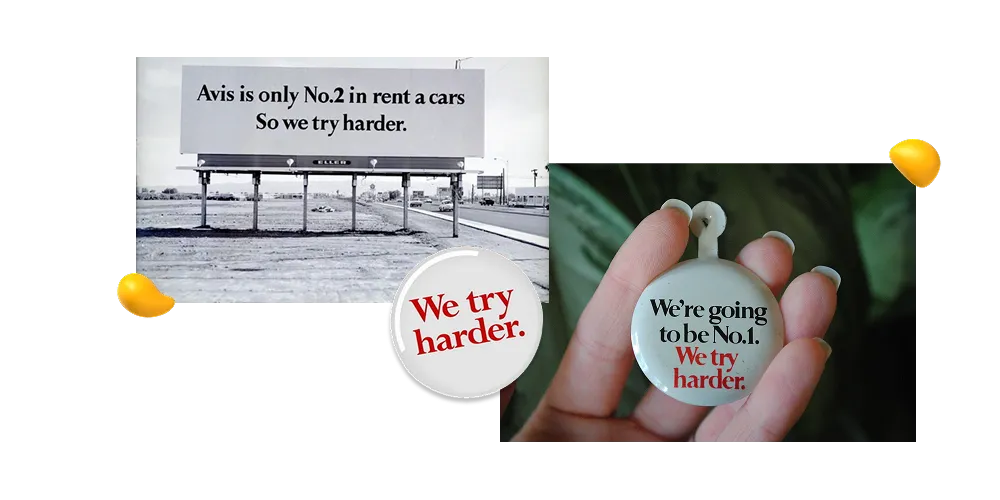
In 1962, Avis was the second-largest car rental company in the US, trailing far behind Hertz.
Hertz controlled 61% of the market, while Avis held 29% and was losing $3.2 million a year.
Not exactly something you’d slap on a billboard…
The move:
Instead of hiding the fact that they were number two, Avis built the whole message around it.
Smart, huh.
They turned second place into a customer promise:
We have more to prove, so we’ll work harder for you.
And they backed it up with better service, cleaner cars, and more attention to detail. Once “we try harder” became the brand promise, coasting wasn’t really an option.
The result:
Within a year, Avis went from losing $3.2 million to making $1.2 million in profit.
The campaign helped shrink the gap with Hertz and stuck around for decades.
That’s the power of strong positioning. It gives people a clear reason to choose you and a story they can actually believe.
For Avis, second place became the advantage.
2. 7UP: Anti-Category Positioning
“The Uncola.”
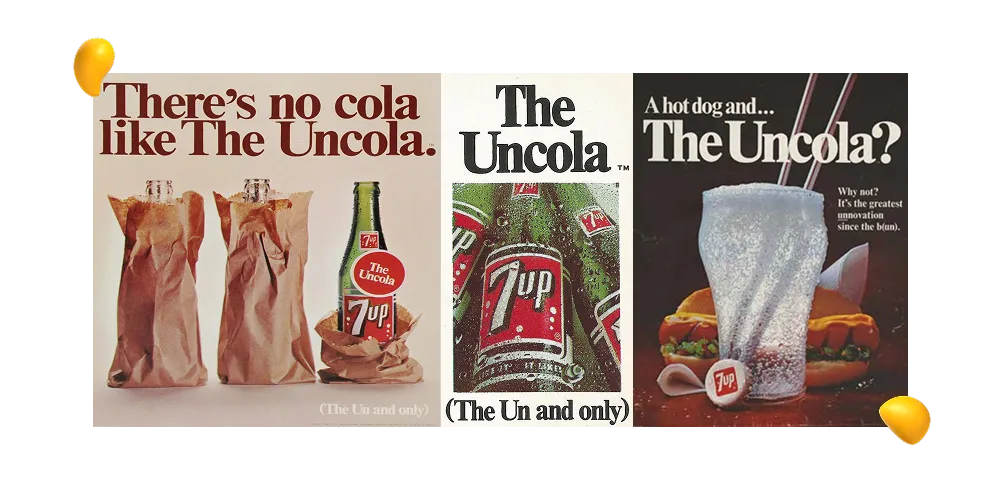
By the late 1960s, Coke and Pepsi had the soft drink market locked up.
They defined the category. Dark, sugary, cola = default.
And 7UP?
It was just… there. A clear soda with no obvious lane.
Not exactly a strong position.
The move:
So 7UP sidestepped the fight completely.
Rather than trying to be a better cola, it positioned itself as the thing cola wasn’t.
“The Uncola” gave the brand a clean, instantly recognizable identity built on contrast.
That was the magic. 7UP wasn’t selling flavor notes or fizz levels.
It was selling difference.
The campaign leaned into that with a more alternative, countercultural feel, making the brand seem fresher, lighter, and a little more rebellious than the cola establishment.
Choosing 7UP started to feel less like settling and more like making a point.
The result:
“The Uncola” became one of the most memorable positioning ideas in soft drink history and helped 7UP stand apart in a market dominated by two massive brands.
For 7UP, the win wasn’t becoming a better cola. It was becoming the alternative to cola in the first place.
3. Salesforce: Opposed the Old Way (“No Software”)
“No Software.”
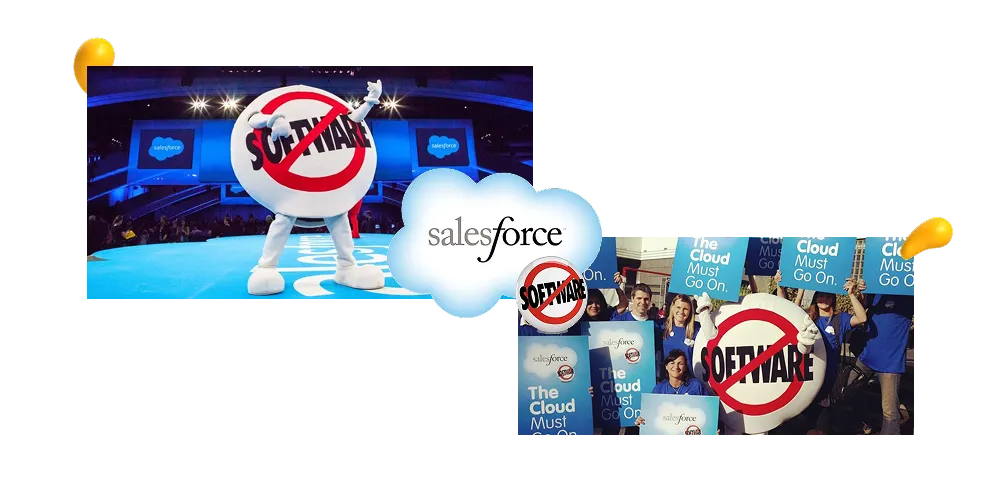
In 1999 and 2000, business software was expensive, clunky, and painful to manage.
We’re talking big upfront costs, CD-ROM installs, consultants, and upgrades nobody was excited about.
The move:
Then Salesforce flipped the script. Instead of positioning itself as better software, it positioned traditional software as the problem.
In 2000, the company even staged a fake protest outside a Siebel conference, using “No Software” to turn a technical shift into something bold, simple, and impossible to ignore.
Suddenly, this wasn’t about features. It was about choosing sides.
The result:
Salesforce helped make SaaS feel like the obvious future and turned a complex B2B shift into something buyers could understand in seconds.
That’s the power of great positioning. It gives people a clear enemy, a clear alternative, and a reason to care.
4. Aldi: Proved Value without Begging to be “Premium”
“Like Brands. Only Cheaper.”
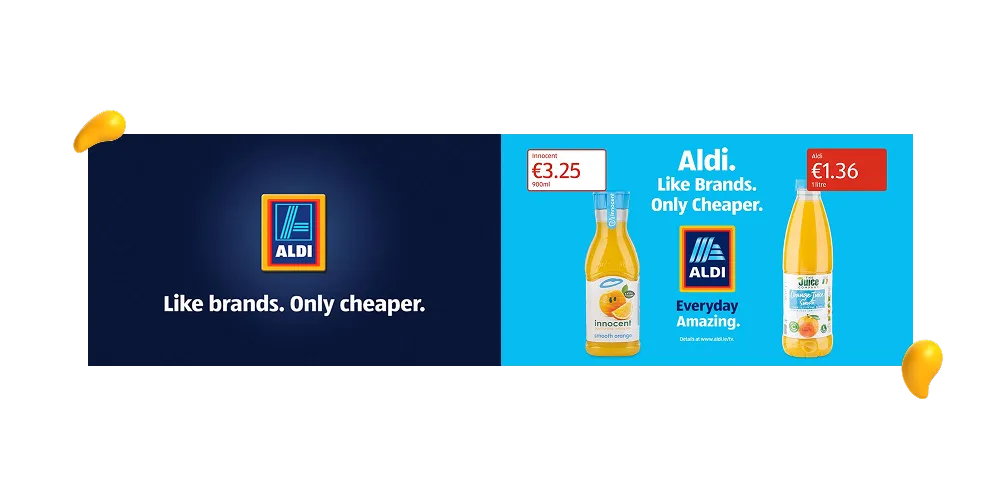
Aldi built its reputation on high-quality everyday products at guaranteed low prices, mostly through its own-label range sourced from hand-picked suppliers.
The move:
Instead of trying to look premium, Aldi focused on proving its quality.
The “Like Brands” campaign used blind taste tests to show that shoppers who liked brands like Heinz and Fairy Liquid also liked Aldi’s versions.
That gave Aldi a stronger story than just “we’re cheaper.”
It also mattered because 80% of Aldi shoppers were still spending money at other supermarkets, to the tune of £20 billion a year.
The result:
The campaign helped Aldi build more trust, loyalty, and market share.
Even moving from 2.3% to 2.5% share was a big win, since every 0.1% was worth about £65 million in revenue.
5. The Ordinary: Radical Clarity in a Category Built on Mystery
“Clinical formulations with integrity.”
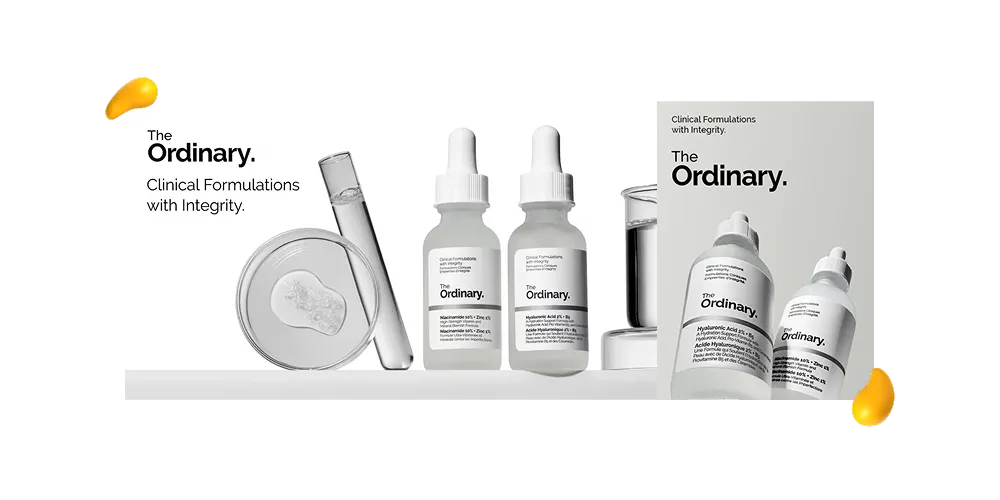
The Ordinary entered a beauty category crowded with vague and ordinary promises, luxury theater, and product names that sounded impressive but told you next to nothing.
Skincare was often sold through aspiration and mystery, with branding doing a lot of the work.
The move:
The Ordinary did the extraordinary.
Instead of dreamy names and vague claims, it made products brutally clear: Niacinamide 10% + Zinc 1%, Hyaluronic Acid 2% + B5, Retinol 0.5% in Squalane.
The brand used minimal packaging, ingredient-first language, and educational content to make skincare feel understandable rather than intimidating.
The result:
That clarity made The Ordinary stand out fast.
In doing so, they were able to build trust, make their pricing feel logical, and turn simplicity into a competitive advantage.
In a category built on mystery, being easy to understand became the reason people paid attention.
6. Liquid Death: Turned Water into Identity + Mission
“Murder your thirst” + “death to plastic.”
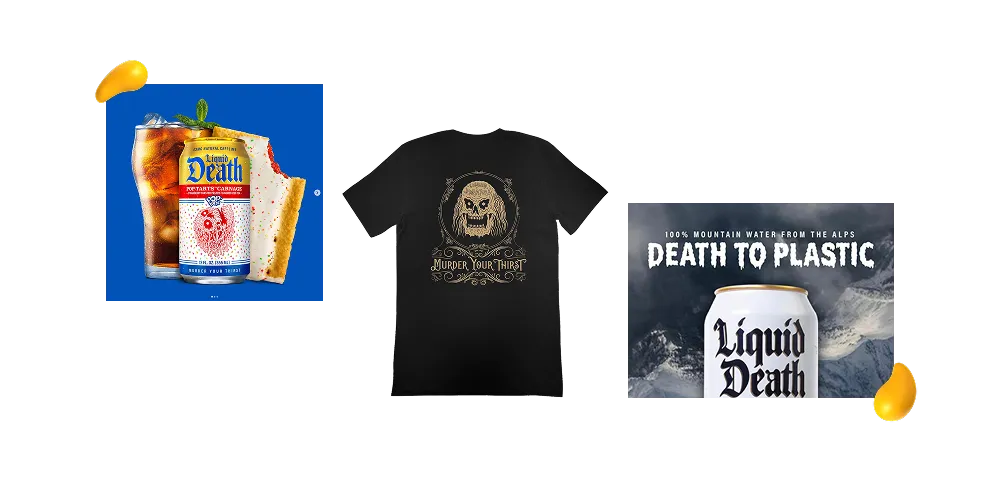
Water branding usually plays it painfully safe. Clean. Pure. Refreshing. Riveting stuff.
Liquid Death saw a category full of bland, earnest marketing and realized healthy products did not have to look or sound so well-behaved.
The move:
So instead of acting like a wellness brand, it showed up like a punk band.
Tallboy aluminum cans. Heavy-metal name.
Taglines like “Murder your Thirst” and “Death to Plastic.”
Better yet, the chaos had a point: make water entertaining, build a strong brand identity, and wrap it all in a sustainability mission people could actually latch onto.
The result:
And just like that, water got a personality.
Liquid Death turned a boring product into something people wanted to share, wear, and be associated with.
That’s the magic of sharp positioning: when every product starts looking the same, identity does the heavy lifting.
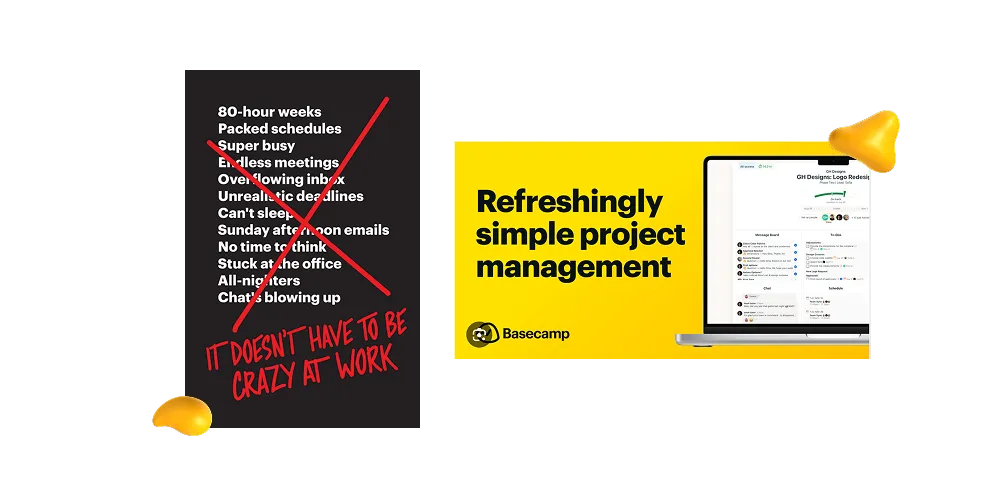
7. Basecamp vs 37signals: “Calm Company” vs Hustle Chaos
“We build a calm company.”
Most companies still run on noise.
Packed calendars, endless pings, urgency pretending to be importance.
You know the drill.
But Basecamp looked at that and went the other way.
Originally founded as 37signals, the company built Basecamp first as an internal tool, then as the product it became known for.
From the start, they rejected VC-fueled hypergrowth, stayed profitable, and kept the team intentionally small.
For a while, that made them look unusual. Now it looks pretty smart.
The move:
Basecamp built everything around calm.
The product simplified work, and the company followed suit: fewer meetings, async communication, 40-hour weeks, no growth-at-all-costs mindset.
Even their book It Doesn’t Have to Be Crazy at Work reinforced the same idea.
The result:
People tired of hustle culture saw Basecamp and thought, finally. Others were turned off. Good.
That was part of the point.
Basecamp proved that strong positioning isn’t just about attracting the right people. It’s also about filtering out the wrong ones.
8. Grainger: Customer-as-Hero Positioning
“For the ones who get it done.”
Industrial supply brands usually sell parts and specs.
Grainger zoomed out.
Their target market and audience?
The people fixing things before anyone notices they were broken. The ones getting the 3 a.m. call when a system fails.
In their own campaigns, these customers are framed as “unsung heroes” solving problems under pressure.
The move:
Grainger made the customer the hero and positioned itself as the backup.
Campaigns show real scenarios like equipment breaking in the middle of the night, where the only thing that matters is getting the right part, fast.
And they back that up operationally:
- 99%+ fulfillment rates so parts are there when needed
- Massive inventory and distribution network
- Solutions like KeepStock that manage, track, and auto-replenish inventory on-site
The result:
Grainger turns maintenance and ops work into something closer to identity. Not glamorous, but critical.
And that is why it lands.
Because when you name the real hero in the story, people stop seeing you as a vendor and start seeing you as the one who has their back.
9. Ryanair: No-Frills, Low-Fares (& Doesn’t Apologize)
Low fares. No frills. That’s the deal.
Most airlines try to soften the experience. Fancy names, “enhanced comfort,” a free biscuit to distract you.
Ryanair went the other way. No illusions. No upgrades hiding behind nicer wording.
Just a very blunt promise: we’ll get you from A to B for as cheap as possible.
And yes… you’ll feel it.
The move:
Here’s where it gets sharp. They didn’t just say low-cost. They engineered everything around it.
Secondary airports. One aircraft type (hello, Boeing 737). Fast turnarounds. Strict baggage rules.
Miss check-in?
There’s a fee waiting for you.
Onboard?
No reclining seats.
And the best part?
They lean into it. No “premium value” spin. Just cheap flights, done efficiently.
The result:
That honesty builds trust. You know exactly what you’re signing up for. No disappointment, just confirmation.
Ryanair scaled that model into Europe’s largest airline by passenger numbers.
Because when you own the tradeoff, people stop complaining about it.
They just decide if it’s for them.
10. Dollar Shave Club: Underdog Clarity + Humor
“Our blades are f*ing great.”
The razor category was dominated by giants like Gillette, pushing expensive cartridges, endless “innovation,” and locked cabinets at stores.
Customers were overpaying for features they didn’t ask for… and everyone knew it.
The move:
Dollar Shave Club came in swinging. A $4,500 launch video, a deadpan founder with a machete, and one line that said it all: “Our blades are f*ing great.”
Here’s the genius: every joke carried the value prop.
Cheap razors. Delivered monthly. No gimmicks. No upsells.
Founder as the face. Humor as the strategy. Subscription model to match the promise. Clean, repeatable, and impossible to miss.
The result:
The video exploded.
12,000 subscribers in 48 hours. Servers crashed. Millions of views followed.
Gillette had to cut prices and copy the model. A few years later, Unilever acquired Dollar Shave Club for $1 billion.
How Brand Positioning Has Shifted (1960s → 2026)
In the 1960s, positioning often lived in a slogan.
Avis had “We try harder.” 7UP had “The Uncola.”
Today, it has to show up across the whole business.
Aldi’s value positioning works because its pricing and operations support it. Ryanair’s low-fare promise is built into the experience.
Additionally, Basecamp’s calm-company philosophy shapes both product and culture.
The biggest shift?
Brands no longer just claim to be different. They define what they stand against and make tradeoffs people can actually believe.
9 Reasons Why Brand Positioning Still Matters (Even with AI)
AI can help brands create more content, more campaigns, and, frankly, more noise.
That’s exactly why brand positioning matters more now.
When everything starts to sound polished and vaguely the same, positioning helps your brand stand out, make sense faster, and build trust sooner.
Here are nine benefits of a consistent and effective brand position:
1. Stronger Brand Recall
A strong position gives people something specific to associate with your brand.
Think Volvo and safety or Liquid Death and rebellious canned water.
That mental shortcut matters.
Without it, your brand drifts into the vague little pool of “seems fine,” which is not exactly where memorable brands are made.
2. Faster Buyer Understanding
Buyers don’t want to solve a riddle just to understand what you do.
In fact, people form judgments about a brand in under 90 seconds, so your positioning needs to make the point fast.
Here’s the payoff: when people understand you quickly, they can choose you more confidently.
3. Quicker Trust-Building
Clear positioning makes your value feel believable.
And that’s crucial since 59% of shoppers prefer to buy from brands they trust.
If you position yourself as affordable, premium, durable, or simple, the experience has to match.
When the message and reality line up, trust comes a lot easier.
4. More Consistent Messaging
Positioning acts like a filter for your website, ads, sales decks, social posts, and campaigns.
Everyone tells the same story, just in different formats.
And that consistency can pay off: brands that present themselves consistently can see up to 23% more revenue.
5. Clearer Competitive Differentiation
A company’s brand is its identity, which means positioning plays a huge role in helping people understand what makes you different.
It creates clarity around who you serve, why you are relevant, and what sets you apart.
Otherwise, you risk sounding like a slightly rearranged version of the competition.
6. Stronger Pricing Justification
Pricing makes more sense when the positioning supports it.
If your brand is built around premium quality, exclusivity, or superior performance, a higher price feels earned.
If your brand is built around value, the lower price feels intentional rather than suspicious.
Either way, positioning gives the price a story people can believe.
7. Sharper Creative Direction
A clear position makes marketing sharper because the brand knows what idea it is amplifying.
That’s when creative work gets stronger.
You’re not throwing spaghetti at the wall. You’re building from one clear strategic core, which usually leads to better campaigns, stronger recognition, and fewer “what are we even trying to say?” meetings.
{{cd-led-team-an}}
8. Better Strategic Focus
This is where it gets real.
Good positioning clarifies what you do, who you serve, and what you are not trying to be.
For example, Ryanair doesn't try to feel luxurious, while Basecamp doesn’t try to exude hustle culture.
That restraint is part of why both positions work. You can’t claim everything and expect people to believe any of it.
9. Stronger Long-Term Brand Equity
Positioning isn’t a one-time exercise.
It’s a long-term commitment to being recognizable, relevant, and credible over time.
The more consistently you reinforce the same idea, the more likely people are to remember you, trust you, and come back when they need what you offer.
Put Your Brand in a Better Position with Designity
A strong brand position means nothing if it falls apart once your team starts building the content, campaigns, and creative meant to express it.
And that’s the real challenge.
Not choosing the position, but keeping it clear across every touchpoint that shapes how people see your brand.
Designity helps brands do exactly that with:
- Dedicated Creative Directors who protect the strategy and sharpen the point of view
- Creative Project Managers who keep execution organized and consistent
- Digital marketing experts who connect positioning to target audience, performance, and growth
- 100+ creative and marketing services so your messaging shows up cohesively across content, design, video, paid, and more
- Top 1% vetted global Creatives and Marketers for high-quality execution
- Flexible month-to-month plans plus a 2-week trial with no upfront payment
Book a demo call today to see how Designity can bring your brand positioning to life across 100+ services.