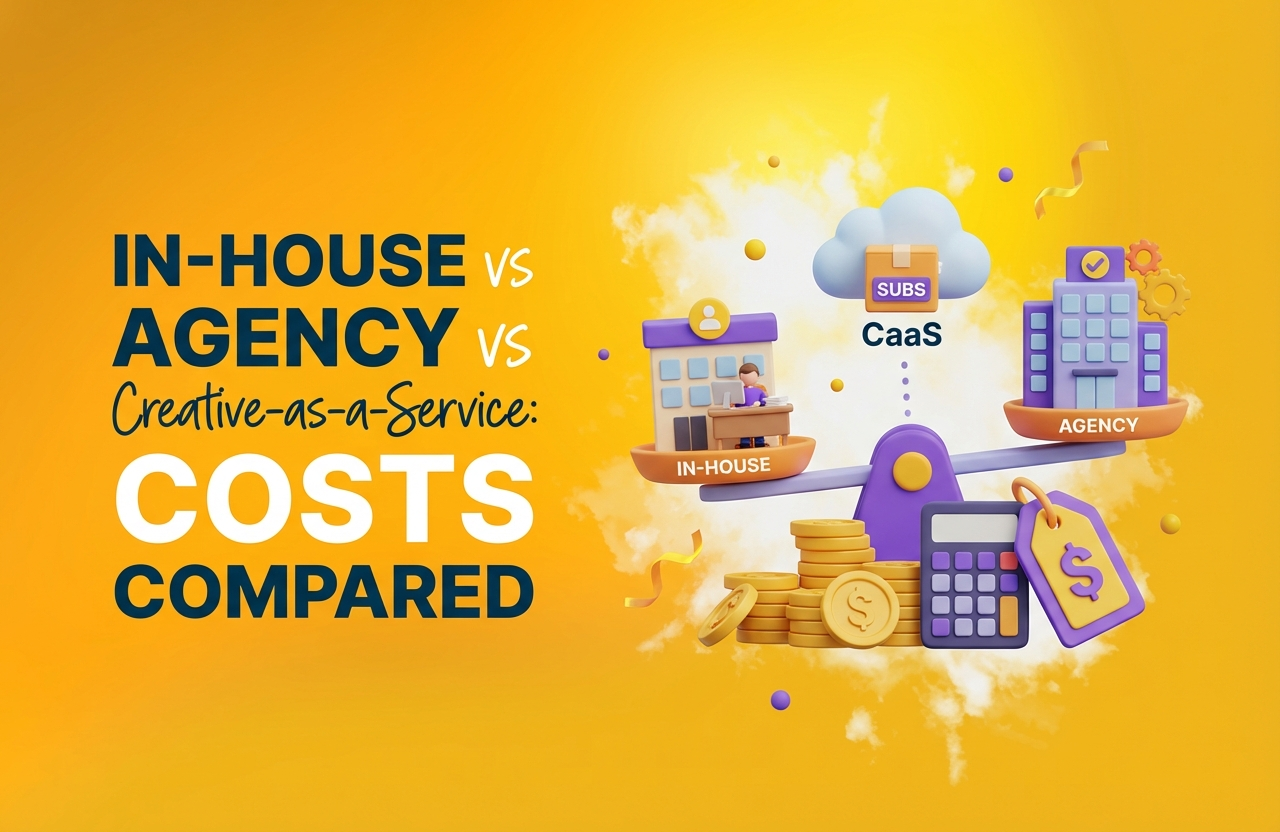








.webp)

Marketing today moves fast, and teams are expected to do more with fewer people, tighter budgets, and more channels than ever.
The problem?
Hiring a large in-house marketing team takes months and a serious budget, while traditional agencies often move slowly and come with expensive retainers.
So, how are modern brands actually scaling?
Say hello to fractional marketing.
This flexible model gives companies access to senior strategy and specialized execution, without committing to full-time hires or expensive agency retainers.
In this guide, we’ll break down how you can benefit from fractional marketing, how it compares to agencies and in-house teams, and when it’s the right move for your business.
What Is Fractional Marketing?
Fractional marketing is a flexible way to get experienced marketing talent without hiring full-time.
Instead of bringing on one person to do everything, companies tap into various senior marketers and specialists on a part-time basis, only when they’re actually needed.
Think of it like an outsourced marketing department.
A typical fractional marketing team might include:
- A fractional CMO setting strategy and priorities
- A fractional marketing manager running day-to-day execution
- A fractional paid media specialist managing acquisition
- A fractional SEO or content strategist driving organic growth
This model became popular as marketing grew more specialized, budgets tightened, and remote work made top-tier talent easier to access, making fractional teams a smarter, lower-risk way to scale.
Fractional Marketing vs. Agencies, Full-Time Hires, and Freelancers
Here’s a side-by-side comparison of how fractional marketing actually differs from agencies, full-time employees, and freelancers:
7 Reasons Why Brands Switch to Fractional Marketing
From lower costs to faster execution and built-in scalability, fractional marketing checks a lot of boxes for growing brands:
1. Get Senior Marketing Leadership without Full-Time Costs
One of the biggest benefits of fractional marketing is cost efficiency.
Brands get access to senior-level leadership without the long-term commitment, overhead, or risk of full-time hires.
Take the creative director role. In the US, a full-time creative director earns an average base salary of ~$132,000 per year, before benefits, bonuses, etc.
On the other hand, fractional creative directors offer the same level of senior leadership at a fraction of the cost.
With Designity, brands get a dedicated Creative Director and the top 1% of global creatives and marketers on demand.
What's more?
Plans start at $5,995/month, or ~$71,940 per year, with access to 100+ marketing and creative services.
2. Access Specialized Marketing Experts Instead of One Generalist
Modern marketing requires depth across multiple disciplines, not a single person trying to cover everything.
Fractional marketing allows brands to tap into specialists with proven experience in specific channels, from performance and SEO to content, branding, and analytics.
Instead of stretching one generalist thin, teams can bring in the exact expertise needed for each initiative.
The result?
Higher-quality execution, smarter decision-making, and better performance, without the cost or commitment of hiring multiple full-time employees.
3. Scale Marketing Resources Up or Down as Needed
Marketing needs aren’t static, and your team shouldn’t be either.
Fractional marketing lets you ramp up support during busy moments like launches or big campaigns, then dial it back once things are running smoothly.
For example, you might bring in more digital marketing specialists to launch paid ad campaigns or set up conversion tracking for a new initiative, then reduce support to light optimization once performance stabilizes.
It’s a practical way to stay agile, avoid overhiring, and only pay for the level of help you actually need.
At Designity, you can scale the number of creatives you need up or down as priorities shift.
4. Launch Campaigns and Initiatives Faster
As you know, when timing matters, waiting weeks to hire or onboard isn’t an option.
Fortunately, fractional marketing teams are built to move fast, stepping in with clarity, structure, and execution from day one.
Why?
Because they don’t start from scratch. These are seasoned operators with proven playbooks.
In fact, brands that work with Designity often see around 50% faster project delivery and 60% fewer revisions thanks to our Creative Directors with 10+ years of experience and AI-enabled workflows.
5. Benefit from Experience Across Multiple Industries
Why reinvent the wheel when proven strategies already exist?
Fractional marketers work across multiple industries, giving them a broader perspective on what actually drives results.
They’ve seen similar challenges play out in different contexts and know how to adapt winning approaches quickly.
That cross-industry experience helps teams avoid costly experimentation, spot opportunities sooner, and apply tactics that are already proven, just tailored to your market, audience, and goals.
6. Gain an Objective, Outside Perspective
Sometimes the biggest breakthroughs come from a fresh set of eyes.
Fractional marketers aren’t tied to internal politics or legacy decisions, which allows them to objectively assess what’s working, what’s falling flat, and where opportunities are being missed.
That outside perspective often surfaces clearer priorities, smarter strategies, and more creative solutions, helping teams cut through noise and focus on what actually drives results.
7. Reduce Hiring Risk with Flexible Commitments
Hiring full-time marketers is a big bet, and when it doesn’t work out, it leads to wasted time, money, and momentum.
Fractional marketing lowers that risk by letting teams bring in experienced talent without long-term commitments.
You can test roles, channels, or strategies, adjust scope as priorities change, and move on if something isn’t delivering.
It’s a smarter way to hire with confidence, avoid overcommitting too early, and stay agile as your business evolves.
Designity makes this even easier with a 2-week trial (no upfront fee), giving you hands-on access to 100+ marketing and creative services, so you can experience our quality, speed, and collaboration style firsthand before committing.
10 Fractional Marketing Roles You Can Hire
Here are just a few of the fractional marketing roles you can work with:
- Fractional Chief Marketing Officer (CMO): Sets overall marketing strategy, aligns initiatives with business goals, and provides senior leadership without full-time overhead.
- Fractional Creative Director: Sets the creative vision, translates business goals into clear creative direction, and ensures consistency and quality across campaigns. At Designity, every plan includes a dedicated Creative Director who serves as your main point of contact and leads strategy in collaboration with specialized experts.
- Fractional Marketing Director: Translates strategy into execution, manages day-to-day marketing efforts, and keeps teams and timelines on track.
- Fractional Digital Marketing Manager: Oversees digital channels to drive traffic, leads, and conversions across paid, owned, and organic efforts.
- Fractional Content Strategist: Defines messaging, content strategy, and storytelling that support demand generation and brand positioning.
- Fractional Graphic Designer / Visual Creator: Produces high-quality creative assets for ads, websites, social media, presentations, and campaigns.
- Fractional SEO Specialist: Improves organic visibility through technical SEO, keyword strategy, and content optimization.
- Fractional Paid Media Specialist: Plans, launches, and optimizes paid advertising campaigns across platforms like Google and LinkedIn.
- Fractional Marketing Analyst: Tracks performance, analyzes results, and delivers insights to improve ROI and guide decisions.
- Fractional Product or Brand Marketer: Shapes positioning, messaging, and go-to-market strategy to support launches and long-term growth.
Designity brings these capabilities together through our Creative-as-a-Service model, offering access to 100+ marketing and creative services across industries like healthcare, lifestyle, food, legal, retail, and more.
The result?
A flexible setup that combines strategy, execution, and creative under one roof, without the complexity of managing multiple vendors or hires.
When You Should Use Fractional Marketing
Leverage fractional marketing services when:
- You’re preparing for a product launch or experimenting with a new growth initiative and need senior expertise to lead your marketing department without expanding your internal team.
- Your current marketing efforts have stalled, and you need seasoned leadership to diagnose problems and reset direction.
- You’re dealing with a short-term gap, whether from turnover, leave, or reorganization, and need experienced marketing professionals to step in quickly.
- You want to test a role, channel, or strategy before making a permanent hire.
- Your campaigns aren’t delivering results, and you need specialists to identify what’s broken and fix it.
- Your workload fluctuates, making it impractical to maintain a full-time team year-round.
- You’re operating within a limited budget but still need high-quality marketing execution.
- You’re an early-stage company building your marketing foundation for the first time.
- You’re navigating market or economic uncertainty and need flexible leadership to help guide decisions.
{{drowning-in-projects-an}}
How to Hire a Fractional Marketing Team
Here are eight steps to help you find and build a successful fractional marketing team:
1. Define Your Business Goals and Marketing Objectives
Start by aligning on what success looks like for your business.
Clarify your top priorities, whether that’s revenue growth, market expansion, or launching a new product, and translate them into measurable marketing objectives.
Clear goals ensure your fractional marketing team focuses on outcomes, not just activity, and makes it easier to evaluate performance over time.
2. Choose the Tactics and Channels That Support Those Goals
With goals defined, determine which marketing channels and tactics will get you there fastest.
Focus on the channels most likely to deliver impact instead of spreading resources too thin.
Fractional marketing works best when there’s a clear plan for where effort will be concentrated and how success will be measured.
3. Identify Where Your Team Needs Support
Rather than jumping straight to job titles, assess where execution or leadership is breaking down.
Are strategies not getting implemented?
Are campaigns slow to launch?
Fractional marketing fills these gaps by adding focused support exactly where momentum is lost.
4. Set Clear Time Commitments for Each Area of Work
Determine how much support you actually need each week or month.
Some initiatives require short bursts of effort, while others benefit from ongoing involvement.
Clear time expectations help fractional teams prioritize effectively, avoid overlap with internal resources, and keep costs aligned with real business needs.
5. Establish a Budget That Matches Your Growth Stage
Fractional marketing budgets should reflect your current goals, not long-term headcount plans.
Decide what level of investment makes sense today while leaving room to scale.
Many business leaders choose predictable monthly pricing models, like Designity’s, to avoid fluctuating costs and simplify financial planning.
6. Choose a Sourcing Model That Saves Time
Finding and managing individual fractional marketers can be slow and unpredictable.
Instead of juggling searches, contracts, and onboarding, many brands turn to on-demand fractional marketing solutions like Designity.
With access to the top 1% of vetted experts and onboarding in as little as 72 hours, teams can move faster with far less operational lift.
7. Evaluate Talent and Finalize Contracts Before Work Begins
Even with fractional hires, due diligence matters.
Review experience against your goals, conduct structured interviews when needed, and check references to confirm past performance.
Once aligned, finalize contracts that clearly define scope, time commitment, payment terms, and success metrics.
With Designity, there are no long-term lock-in contracts. Engagements are structured around flexible monthly, quarterly, or annual plans.
You’ll start with a demo call, get matched with a Creative Director with 10+ years of relevant industry experience, and that Creative Director hand-picks the best creatives for each project.
8. Onboard Quickly and Optimize as You Go
The goal of fractional marketing is speed and flexibility.
So, onboard efficiently by integrating fractional marketers into your tools, workflows, and communication channels.
Launch quickly, track performance, and refine as you go. As priorities shift, adjust scope and focus instead of restarting the hiring process.
Now you may be thinking: that’s a whole lot of steps.
And that’s exactly why many brands choose a streamlined fractional marketing solution like Designity, so they don’t have to manage all or any of this on their own.
Designity: All the Fractional, None of the Friction
Fractional marketing has become the go-to model for brands that want senior expertise, faster execution, and flexibility, without the cost and rigidity of a full-time marketing team.
But not all fractional setups are created equal.
The real advantage comes from having strategy, execution, and creative working together seamlessly.
That’s where Designity stands out.
Designity’s Creative-as-a-Service model hand-matches every client with a dedicated Creative Director and an on-demand team of vetted specialists across design, content, performance, and strategy.
With flexible month-to-month plans, no long-term lock-in contracts, and the ability to scale up or down as priorities change, Designity removes the operational friction that slows most teams down.
The result is smarter marketing, faster execution, and better ROI, without the overhead.
So, what are you waiting for?
Book a demo call today and test-drive Designity’s 100+ fractional marketing and creative services (no upfront fee).
4 FAQs Related to Fractional Marketing
Here are the answers to a few burning questions related to fractional marketing:
1. What Is Fractional Marketing?
Fractional marketing is a flexible model that gives companies access to experienced marketing leaders and specialists without hiring them full-time.
Instead of relying on one in-house generalist or a traditional agency, brands can bring in the exact support they need, such as a fractional CMO, marketing director, SEO strategist, paid media specialist, content strategist, or creative director.
It’s especially useful for companies that need senior strategy, faster execution, and specialized expertise without the cost, time, or risk of building a large permanent team.
2. Is Fractional Marketing Right for My Brand?
Fractional marketing is a strong fit if your team needs senior marketing expertise but isn’t ready to hire full-time.
It can also help if your campaigns are moving too slowly, your in-house team is stretched thin, your marketing results have stalled, or you need support for a launch, growth push, rebrand, or short-term gap.
If you need flexible access to strategy and execution without managing multiple freelancers or committing to a long agency retainer, fractional marketing may be the right move.
3. What Is a Fractional CMO's Salary?
A fractional CMO usually doesn’t earn a traditional salary from one company.
Instead, they typically work on a monthly retainer, hourly rate, or project-based fee.
In 2026, many fractional CMO retainers fall somewhere around $10,000–$15,000 per month, depending on experience, company size, scope, and time commitment.
Senior fractional CMOs supporting more complex growth strategies may cost more.
The key benefit is that brands can access executive-level marketing leadership without paying the full compensation package of a full-time CMO.
4. How Much Does Fractional Marketing Cost?
Fractional marketing costs vary depending on the roles, services, and level of support you need.
A single specialist may cost a few thousand dollars per month, while a senior fractional CMO or multi-specialist team can reach five figures monthly.
With Designity, plans start at $5,995/month and include a dedicated Creative Director, access to the top 1% of global creatives and marketers, and 100+ marketing and creative services.
That makes it easier to scale strategy, execution, and creative support without hiring full-time or managing multiple vendors.