




A brand can have clear guidelines and still feel different from one asset to the next.
So how do you keep the work connected as more specialists, channels, and AI tools enter the process?
For Designity Creative Director Gabriella Bajkai, brand consistency starts with understanding what the client values, giving creatives practical direction, and aligning on the core idea before production moves too far.
We sat down with Gabriella to talk about her career, her approach to brand consistency, and the thinking behind a skincare campaign spanning emails, ads, social posts, and video.
Here’s what she had to say.
Meet Creative Director Gabriella Bajkai
Gabriella’s path to creative leadership began in multimedia design and took her through major agencies before Designity.
1. How Did You Become a Creative Director?
Taking you way back, I got my bachelor’s degree at the University of Johannesburg in 2012, and that was in multimedia design. Then I went into graphic design.
From there, I transitioned into art direction, and I’ve worked around the block, as one would say. I’ve been to the likes of Ogilvy and Publicis and the big international agencies around South Africa and Johannesburg.
Then I landed at Superside. I was there for five years, and now I’m at Designity as a Creative Director. So that’s been my creative ladder.
Brand Consistency Starts With Shared Understanding
Gabriella combines hands-on direction with room for specialists to contribute their own expertise. Keeping that balance starts with a shared understanding of the brand.
2. How Would You Describe Your Creative Leadership Style?
This is a question that I’ve been turning over in my brain a bit. I would say my style is very hands-on when it comes to creative direction and the creatives, but I also like the creatives to bring their own expertise to the table.
So it’s about where to push, where to pull back, and understanding that both of these need to be in balance.
When it comes to the creative side, I like to push the creative ideas, but I also like to lean back when it comes to creative expertise and let them bring ideas to the table.
3. What Drew You to Designity’s Creative Model?
Coming from big agencies, I like the idea of a smaller boutique model with an ongoing client relationship and different creatives who are specialists suited to different projects.
It’s about tapping into creatives who are specialized and having small, niche relationships, compared to big agencies where things would fall under the radar or be pushed so hard because the relationship wasn’t there with the client and the creatives.
Over time, we can build a brand and bring expertise that directly correlates with what the client wants. So I really enjoy the collaboration aspect of design with our clients and bringing different specialists and perspectives.
I like the uniqueness, the authenticity, and the small boutique stance that we all share as a community and as a family. We all know each other, and we know each other’s strengths, which is so lovely.
4. How Do You Get to Know a Brand Beyond Its Guidelines?
Obviously, first off, you have to look at the guidelines.
My biggest thing is also to ask the client about the guidelines because things change over time. Things are moving forward, and guidelines move and are quite fluid.
So I ask the client which pieces feel most representative of the brand. But then I also ask AI to analyze their guidelines.
For instance, I would use Lovart, ChatGPT, or Claude to really get into the bits and bobs. From there, I can create a brand project that can solidify, represent, and cross-check everything neatly from a creative direction standpoint.
I’m looking for the principles behind the brand: what makes it credible, distinctive, and recognizable to its audience.
That’s where all those AI plugins come in, to keep everything in line.
But as we all know, the human eye is always the better eye.
“Love Designity, as one of their early clients we still use their services and find the quality of work to be outstanding.”
5. How Do You Keep Every Specialist On-Brand When You’re Not in the Room?
Working closely with the team, it’s good to have practical direction from the beginning. Also, touchpoints throughout the months. You can’t just let things run for weeks and months on end.
I feel that sitting down with the creatives, letting them know what’s been updated and where we’re headed before we move far into production, is important.
We like to align on the core creative first before rolling it out into adaptations.
The use of client feedback is really important, and giving that feedback to the creatives in a manageable way is what I try to do well.
Really translate the information clearly, give references and approved assets, and show what that project could look like.
For more on turning client input into practical direction, explore Designity’s guide to giving creative feedback.
6. How Does AI Help Maintain Brand Standards at Scale, and Where Do You Keep Things Human?
My plugins, all the little LLMs, and image generators are great for bringing different sides to the table. They can also scan and review things, which has been quite nice.
They can help us explore ideas, and I think that’s where the strength lies within this AI world that we’re in.
The generative ideas that come from the likes of ChatGPT or Claude are very insightful in terms of where we could take big ideas.
But I find that the creative human brings that to life in a very special, unique way because AI, as we know, is all based on past data and things that have already been generated before.
What I try to push with our creatives is to look further into the future, beyond what comes from an LLM.
Creative ideas are things that haven’t been thought of, whereas all our AI-generated stuff has been thought of already.
That’s where human insight and human conceptual thinking come in, and that’s where I really try to push.
The output still needs human judgment, as we spoke about earlier: that critical human eye.
Does it still feel like the brand? Is the product represented accurately? Does the image support the message? These are still things that we, as creatives and Creative Directors, need to push through together.
Brand Consistency in Action: A Skincare Campaign

A weekly skincare campaign gave Gabriella’s team a practical challenge: carry one creative direction across several placements while making each asset work on its own.
7. Can You Set the Scene for the Skincare Project?
The client is Glytone, which is a skincare brand based in the States. They have a lot of skincare products.
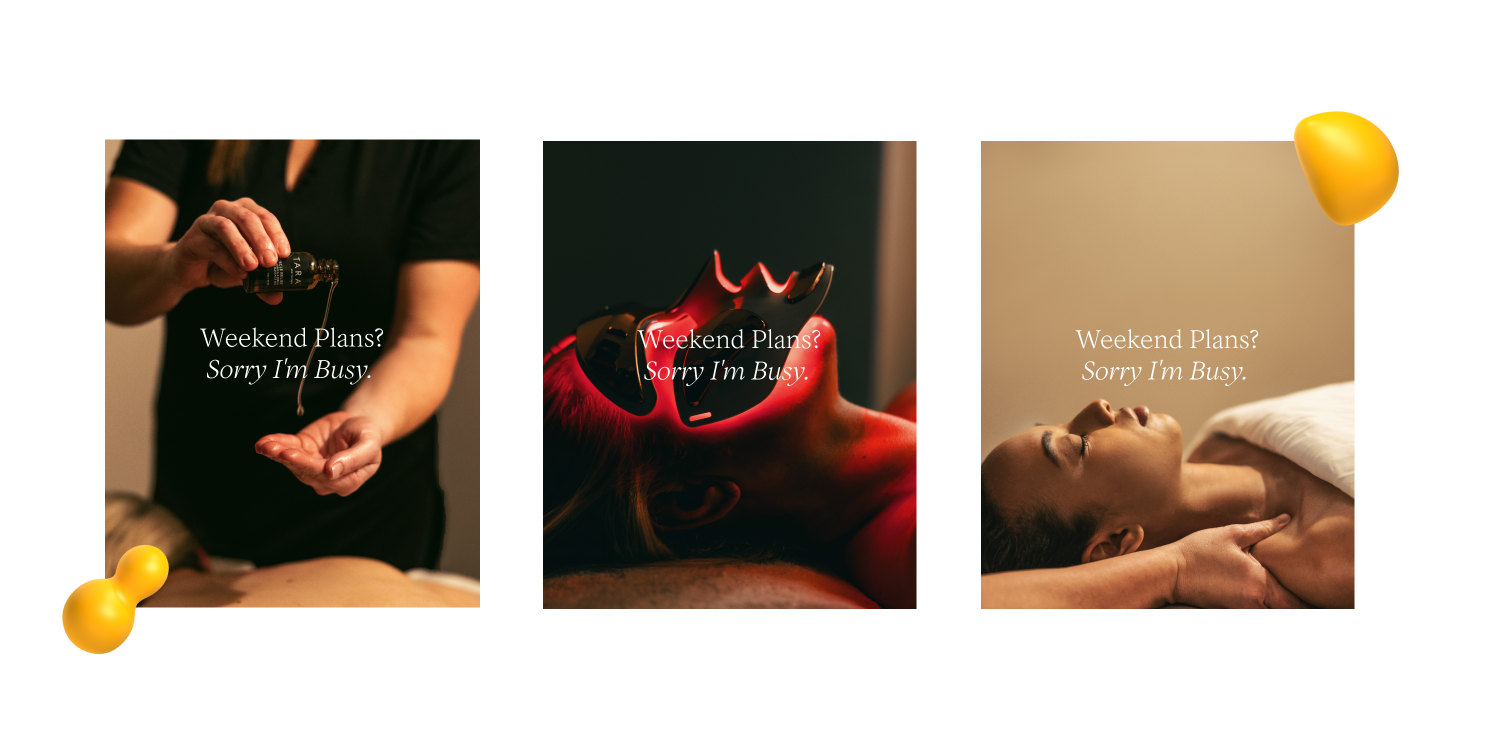
Every single week, we produce three to four emails, website banners, social media, Meta ads, and a video. That includes full emails in Klaviyo, and we produce all of that within a week.
The brief was to highlight their 25% off sitewide offer. We started with a bunch of references that were trending within the skincare space at the time. There was a whole trend around products and mechanical claws. This was a couple of months ago.
The interesting task was to make the products feel as though they were in the real world. We were going to have to render these products in AI, and we had to bring that trend to life.
In the three emails, we have the call to action upfront, the 25%, and the trending looks. The products are rendered really nicely and crisply.
Then we break down the information to take a more educational approach, into smaller bite sizes. We use illustrations or graphics to bring our work to life.
We also produced two videos. One was focused on the claw mechanic for the campaign, and we wanted to test the two.
One was very graphic-based; you could feel it was very AI. Then we wanted to test it against a UGC-style video with natural skin.
8. What Was the First Creative Decision That Shaped the Campaign?
It all started with references, and I think that’s where the creative direction came in. We found that it was trending. We found a beautiful prompt, and we thought we could use it.
That shaped the whole campaign into this game-type space. It felt interactive in some way, and that translated through all the assets. We’ve got the wall, and we’ve got the claw. It was a really nice, cohesive campaign.
9. Was There a Moment When Something Wasn’t Working? How Did You Handle It?
With regard to the reworking, what wasn’t working was the copy. So we had to dive deeper and look at the hierarchy.
Naturally, we used our copywriters, and our copywriters used AI to figure out the hierarchy differentiation and better structure the emails. That was a redo, which was totally fine. We managed to get that sorted within a couple of hours.
That was the only thing we had to pull back on with this campaign. Visually, it was really striking and well received. It was just aligning the copy and hierarchy.
10. What Are You Most Proud of in This Project?
The reason I chose this project is that I’m super proud of the thinking across all the different touchpoints.
Each asset needed to make sense on its own but still contribute to the same campaign.
That meant making deliberate choices about the message, the amount of information, and the visual hierarchy for each placement, like we discussed.
For me, this is where creative direction really adds value: helping make all those individual pieces fit together as a full campaign.
11. How Did the Client React When They Saw the Campaign?
They absolutely loved it. The videos, especially this UGC video, outshone every single video they’d put out there before.
So that was a really great success, and she absolutely loved it. Ten out of ten from her.
Explore why creative direction matters when outsourcing creative services for more on keeping connected work aligned.
What Brand Consistency Means for Marketing Leaders
Gabriella’s closing advice brings the conversation back to the decisions and coordination behind the finished work.
12. What Should Marketing Leaders Know About Working With a Dedicated Creative Director?
How much of the value actually happens before the design starts.
A dedicated Creative Director helps clarify the problem, work through competing feedback, really get to know the brand’s aesthetics and taste, as we were discussing, and give a team direction to act on.
That’s basically what a Creative Director does.
What’s lovely now is that, over time, we build that knowledge within our AI systems, and this knowledge is then easily shared very quickly.
The client also has someone who understands their brand, remembers earlier decisions and conversations, and brings that context into the next project.
13. What Would You Tell a Marketing Leader Who’s on the Fence?
I’d ask where their time is going.
If they’re consistently rebriefing designers, reconciling feedback, or checking whether everything feels on par or like the same brand, those are areas where a dedicated Creative Director can definitely help bring everything together.
I would encourage a client to look at the clarity that a person brings, how well the team understands a brief, how decisions are made, and how effectively the creative supports their goals.
Really getting into their target audience and the specific goals that the client aligns with. That’s basically what I would tell them.
Give Your Brand Consistency a Creative Lead With Designity
Gabriella’s approach starts before production: learn the brand, align the team, and carry that context into every project.
At Designity, dedicated Creative Directors lead creative direction and quality, supported by a Creative Project Manager who coordinates the work.
AI-enabled, human-led workflows support the process while people remain responsible for brand fit and final decisions.
Want a creative partner who carries your brand knowledge forward?
Book a demo with Designity and explore our 2-week trial to see how the team works on a real project.